
In 2008, the F14D4 engine went into production. In actuality, it was an upgraded F14D3 engine, which did not prevent him from experiencing technical issues. The new engine’s typical predecessor issues were successfully resolved.
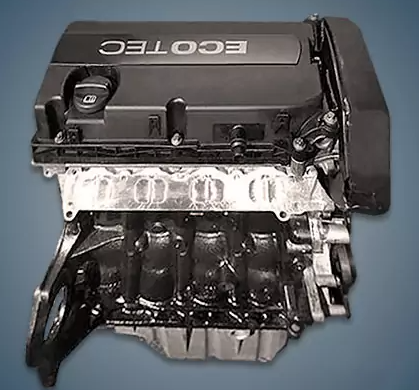
The F14D4 added an electronic throttle valve, individual ignition coils, and a system for adjusting the valve timing on both shafts. The timing belt and rollers now have a longer service life; replacements are now performed every 160 thousand kilometers; the EGR system vanished, which resulted in more drawbacks than benefits; and power increased to 101 horsepower, which is excellent for 1.4.
Since the F14D4 lacks hydraulic lifters, you must choose calibrated cups to modify the valve clearances. This process is completed following a 100,000-kilometer run. GM is particularly fond of thermostat issues, and he won’t let you get bored and request replacements within 60–90,000 kilometers.
The engines F14D3, F15S3, F16D3, F16D4, F18D3, and F18D4 are also part of the F series.
The engine was installed on:
- Chevrolet Aveo T250 in 2008 – 2011;
- Chevrolet Aveo T300 in 2011 – 2020;
- Chevrolet Lanos T150 in 2009 – 2013.
Specifications
| Manufacturer | GM DAT |
| Start of production | 2008 |
| Cylinder block alloy | cast iron |
| Fuel system | distributed injection |
| Configuration | inline |
| Number of cylinders | 4 |
| Valves per cylinder | 4 |
| Piston stroke, mm | 73.4 |
| Cylinder bore, mm | 77.9 |
| Compression ratio | 10.5 |
| Displacement, cc | 1399 |
| Power output, hp | 101/6400 |
| Torque output, Nm / rpm | 131/4200 |
| Fuel type | petrol |
| Euro standards | Euro 4 |
| Fuel consumption, L/100 km (for Chevrolet Aveo T250 2009) — city — highway — combined |
7.9 4.7 5.9 |
| Oil consumption, gr/1000 km | up to 0,6 L/1000 |
| Recommended engine oil | 10W-30 / 5W-30 |
| Engine oil capacity, liter | 4.5 |
| Amount of engine oil for replacement, liter | about 4-4.5 |
| Oil change interval, km | every 15000 |
| Engine lifespan, km | ~350 000 |
Disadvantages of the F14D4 engine
Phase regulators with a service distance of no more than 30,000 km were installed in the early years of production. Later, their resources were expanded, but instances of replacement on a run of up to 100,000 km are still not unusual. Additionally, the grids of solenoid valves rapidly clog due to inadequate lubrication.
The electric throttle assembly on this unit is a little erratic. Its failures are typically caused by dirt on the damper connectors or the engine ECU, but occasionally the contacts bend and the potentiometer track chafes.
The official regulations state that the timing belt should only be changed once every 160,000 kilometers, but this isn’t always the case. Additionally, a broken belt typically causes the valve to bend. The camshaft impulse ring is frequently broken off with an unqualified replacement.
The expansion tank cap, the ignition coil module, the electronic thermostat, or the constantly flowing heat exchanger are additional weak points of this power unit. Additionally, since there are no hydraulic lifters here, remember to adjust the valve clearances.