
From 2008 to 2016, the company produced the 1.8-liter Chevrolet F18D4 or 2H0 engine, which was exclusively fitted to the rather well-liked Cruze model. The power unit is fundamentally identical to the well-known Opel Z18XER engine.
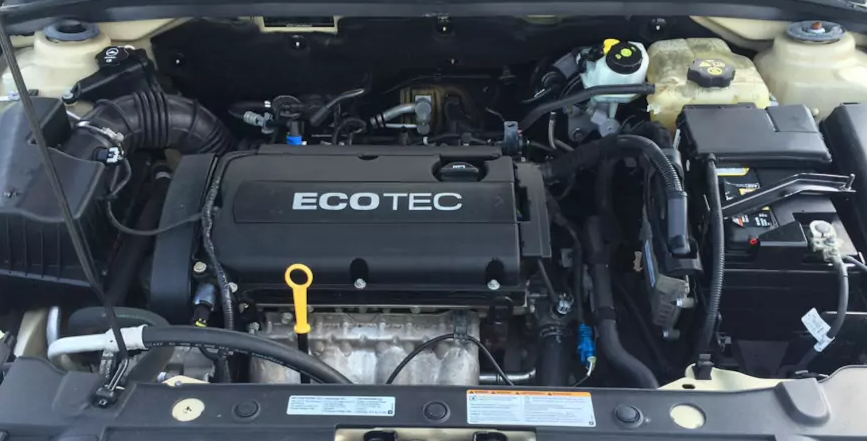
An upgraded version of the F18D3 engine is the F18D4. The engine was equipped with a system to adjust the length of the intake pipe channels as well as a VVT variable valve timing system for the inlet and outlet channels. Although the belt resource was extended to 150 thousand kilometers, the gas distribution mechanism’s drive remained belt-driven. Tared glasses, which need to be replaced every 100,000 kilometers, took the place of the hydraulic lifters. This engine does not have an EGR.
The engines F14D3, F14D4, F15S3, F16D3, F16D4, and F18D3 are also part of the F series.
The engine was installed on:
- Chevrolet Cruze 1 (J300) in 2008 – 2016;
- Chevrolet Orlando J309 in 2011 – 2018.
Specifications
| Production years | 2008-2016 |
| Displacement, cc | 1796 |
| Fuel system | distributed injection |
| Power output, hp | 141 |
| Torque output, Nm | 176 |
| Cylinder block | cast iron R4 |
| Block head | aluminum 16v |
| Cylinder bore, mm | 80.5 |
| Piston stroke, mm | 88.2 |
| Compression ratio | 10.5 |
| Features | VGIS |
| Hydraulic lifters | no |
| Timing drive | belt |
| Phase regulator | at intake and exhaust |
| Turbocharging | no |
| Recommended engine oil | 5W-30 |
| Engine oil capacity, liter | 4.6 |
| Fuel type | petrol |
| Euro standards | EURO 4/5 |
| Fuel consumption, L/100 km (for Chevrolet Cruze 2014) — city — highway — combined |
8.7 5.1 6.4 |
| Engine lifespan, km | ~350 000 |
Disadvantages of the F18D4 engine
Dieseling of the motor is a sign that the phase regulator’s solenoid valves are failing;
Oil leaks frequently occur from beneath the heat exchanger gasket and valve cover;
The thermostat typically has a limited resource for engines in this series;
Electrical failures most frequently occur in the ignition module, electric throttle, and ECU;
Every 100,000 kilometers, the valves must be adjusted due to the absence of hydraulic lifters.