
From 1997 to 2002, the company produced the 1.6-liter 16-valve Daewoo A16DMS engine, which was fitted on a number of reasonably well-known models, including the Lanos, Tacuma, and Nubira. Following modernization in 2002, this power unit was assigned an entirely different index, F16D3.
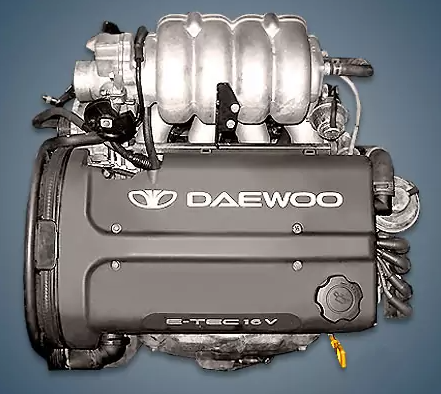
The MS series also includes: A15SMS.
Specifications
| Production years | 1997-2002 |
| Displacement, cc | 1598 |
| Fuel system | injector |
| Power output, hp | 105 |
| Torque output, Nm | 145 |
| Cylinder block | cast iron R4 |
| Block head | aluminum 16v |
| Cylinder bore, mm | 79 |
| Piston stroke, mm | 81.5 |
| Compression ratio | 9.5 |
| Features | no |
| Hydraulic lifters | yes |
| Timing drive | belt |
| Phase regulator | no |
| Turbocharging | no |
| Recommended engine oil | 5W-30 |
| Engine oil capacity, liter | 3.75 |
| Fuel type | petrol |
| Euro standards | EURO 2/3 |
| Fuel consumption, L/100 km (for Daewoo Nubira 2000) — city — highway — combined |
10.7 6.1 7.8 |
| Engine lifespan, km | ~300 000 |
| Weight, kg | 127 |
The engine was installed on:
- Daewoo Lanos 1 (T100) in 1997 – 2002;
- Daewoo Nubira 1 (J100) in 1997 – 2002;
- Daewoo Tacuma in 2000 – 2002.
Disadvantages of the Daewoo A16DMS engine
The numerous oil leaks in this engine are its most well-known issue.
Oil seeping into the candle wells is another common cause of ignition failures.
Every 60,000 kilometers, the timing belt is changed; if it breaks, the valves will bend 100%.
Engine tripping results from the injectors’ dislike of poor fuel and their rapid clogging.
The thermostat, pump, and high-voltage wires are their few resources.