What Does Code P0353 Mean?
DTC P0353 signifies an detected malfunction within the primary or secondary circuit of the ignition coil designated for cylinder #3. The Engine Control Module (ECM), also known as the Powertrain Control Module (PCM), is responsible for continuously monitoring the ignition system to ensure proper spark delivery. In a typical coil-on-plug (COP) or coil pack system, the ECM controls the primary circuit by sending a pulsed ground signal to rapidly switch the coil’s magnetic field, inducing a high-voltage spark in the secondary circuit. When the ECM detects an unexpected voltage, current, or resistance outside of its programmed parameters within this specific circuit—such as an open circuit, a short to ground, or a short to voltage—for cylinder #3’s ignition coil, it registers P0353. This indicates that the ECM cannot properly control or detect the necessary electrical activity for the coil to fire the spark plug effectively, directly impacting the combustion process in cylinder #3.
Common Symptoms
- Check Engine Light (MIL) illumination: The most immediate and common symptom.
- Engine misfire: Specifically on cylinder #3, often accompanied by code P0303.
- Rough idle or vibration: Due to the engine running on fewer cylinders.
- Reduced engine power and acceleration: The engine cannot produce full power with a misfiring cylinder.
- Engine hesitation or stumble: Particularly under load or during acceleration.
- Poor fuel economy: Unburnt fuel passes through the exhaust due to the lack of ignition.
- Raw fuel odor from exhaust: Indicating incomplete combustion.
- Potential catalytic converter damage: Severe, uncorrected misfires can lead to overheating and damage of the catalytic converter.
What Causes the Code P0353?
- Faulty Ignition Coil (Cylinder #3): Internal short circuit, open primary or secondary windings, degraded insulation, or physical damage preventing proper spark generation.
- Wiring Harness Issues:
- Open circuit in the power supply wire to the ignition coil.
- Open circuit in the control wire from the ECM/PCM to the ignition coil.
- Short to ground in either the power or control wire.
- Short to voltage in either the power or control wire.
- Corroded, loose, or damaged connector pins at the coil or ECM.
- Faulty Spark Plug (Cylinder #3): A shorted, fouled, cracked, or excessively gapped spark plug can place undue stress on the secondary coil circuit or prevent proper spark, leading the ECM to interpret it as a circuit malfunction.
- Faulty Engine Control Module (ECM/PCM): A rare but possible cause, where the internal driver circuit for cylinder #3’s ignition coil within the ECM/PCM has failed.
- Damaged Spark Plug Wire (if applicable): For systems utilizing spark plug wires, a damaged or compromised wire can cause a secondary circuit malfunction.
How to Diagnose and Troubleshoot
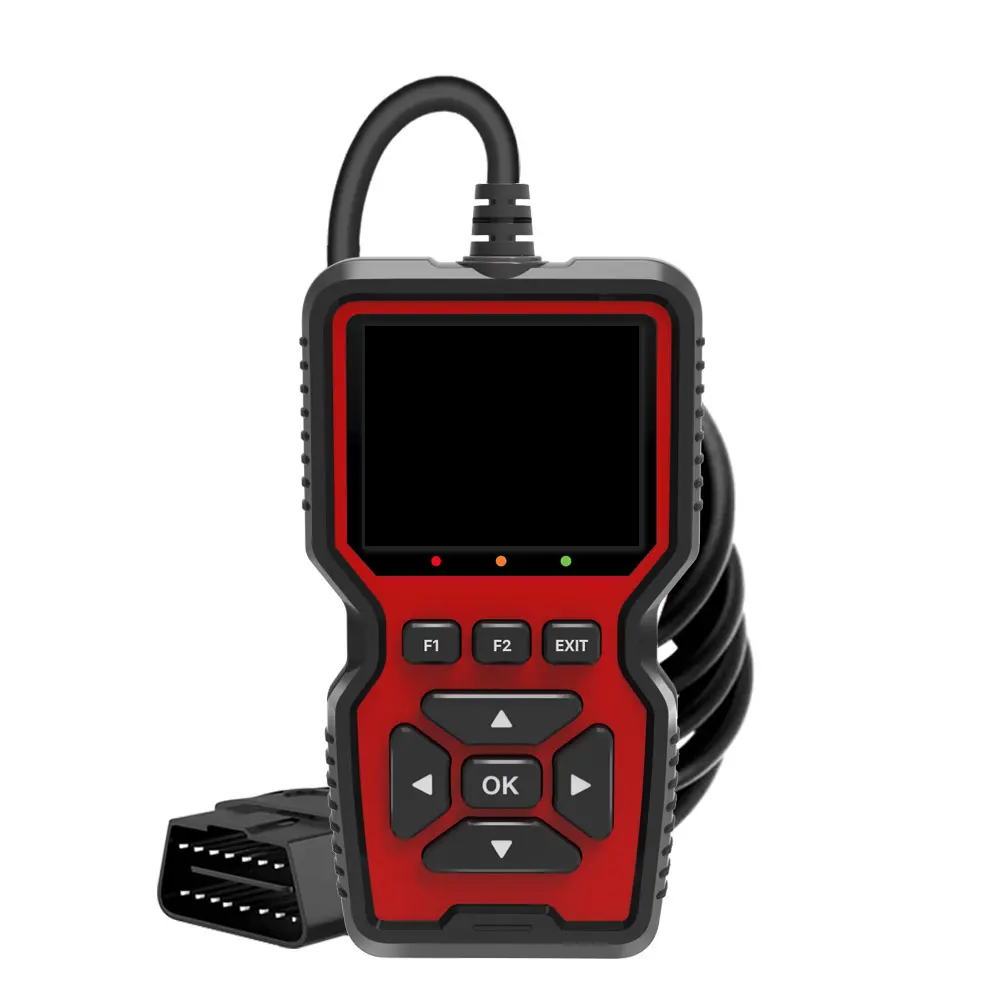
Diagnosis of P0353 requires a methodical approach, utilizing an OBD-II scanner, a digital multimeter (DMM), and visual inspection.
- Initial Scan and Freeze Frame Data: Connect an OBD-II scanner to confirm P0353. Check for any accompanying misfire codes (e.g., P0303), injector codes (P0203), or other related DTCs. Review freeze frame data to understand engine conditions (RPM, load, temperature) when the code was set.
- Visual Inspection:
- Inspect the ignition coil for cylinder #3 for any visible signs of damage, cracks, burn marks, or corrosion.
- Examine the wiring harness connected to the cylinder #3 ignition coil. Look for fraying, chafing, cuts, signs of rodent damage, or pinched wires.
- Check the coil connector itself for corrosion, bent pins, or loose connections.
- If applicable, inspect the spark plug wire and boot for cylinder #3 for damage, carbon tracking, or signs of arcing.
- Remove the spark plug from cylinder #3 and inspect it for fouling, damage, or improper gap. Compare it to other spark plugs.
- Component Swap Test (if accessible): If practical, swap the ignition coil from cylinder #3 with a coil from a known good cylinder (e.g., cylinder #1). Clear the DTCs and start the engine. If the code shifts to the new cylinder (e.g., P0351), the original coil from cylinder #3 is faulty. If the code remains P0353, the issue is not the coil itself.
- Digital Multimeter (DMM) Tests:
- Power Supply Check: With the ignition ON (engine OFF), disconnect the cylinder #3 coil connector. Using a DMM, check for battery voltage (typically 12V) at the power supply terminal of the harness connector. If no voltage, trace the power wire back to the fuse box or relay.
- Ground Circuit Check: With the ignition OFF, check for continuity or very low resistance (typically < 5 ohms) between the ground terminal of the harness connector and a known good chassis ground.
- Control Circuit Check: This requires careful testing.
- With the ignition ON and engine cranking (or running, if possible without misfire causing further damage), use an oscilloscope to check the signal wire from the ECM to the coil. You should observe a pulsed square wave signal.
- Alternatively, a DMM set to AC voltage may show a fluctuating voltage during cranking, indicating a signal, but an oscilloscope provides a definitive pattern. If no signal is present, the issue could be wiring between the ECM and coil, or a faulty ECM driver.
- Coil Resistance Test (if applicable): Some coils allow for primary and secondary winding resistance measurements. Consult service specifications for correct values and compare to cylinder #3’s coil and other coils.
- ECM Driver Test: If all wiring and coil tests pass, and the signal from the ECM is absent or incorrect, it may point to a faulty ECM driver. This usually requires advanced diagnostic equipment or a qualified technician to verify the ECM’s output directly.
Recommended Repairs and Solutions
Once the root cause for P0353 has been accurately identified, implement the following repairs:
- Replace Faulty Ignition Coil: If the component swap test or DMM tests confirm the ignition coil for cylinder #3 is faulty, replace it with a new, high-quality OEM or equivalent aftermarket part. It is often good practice to replace the spark plug for that cylinder at the same time, especially if it’s nearing its service life, to ensure optimal performance and longevity of the new coil.
- Repair or Replace Damaged Wiring/Connector: If the visual inspection or DMM tests reveal damaged wiring, corroded pins, or a faulty connector at the cylinder #3 coil, repair the wiring using proper soldering and heat shrink techniques or replace the entire section of the harness. Ensure all connections are secure and free of corrosion before reassembly.
- Replace Faulty Spark Plug: If the spark plug for cylinder #3 is determined to be the cause (fouled, cracked, or improperly gapped), replace it. It’s often recommended to replace all spark plugs as a set if they are due for maintenance, as one faulty plug can be indicative of general wear.
- ECM/PCM Replacement: This is a last resort and should only be pursued after absolutely all other possibilities have been meticulously ruled out. A faulty ECM driver for the cylinder #3 coil circuit would necessitate ECM replacement, which often requires programming or coding to the vehicle.
Mechanic’s Tips:
- Always use OEM-quality replacement parts to ensure compatibility, reliability, and proper function.
- After any repair, clear all DTCs from the ECM and perform a comprehensive test drive to ensure the code does not return and that all readiness monitors set.
- Consider applying a small amount of dielectric grease inside the coil boot (where it contacts the spark plug) and on electrical connectors to protect against moisture and corrosion, improving connection integrity.
- Consult specific vehicle Technical Service Bulletins (TSBs) for your make and model, as manufacturers sometimes issue advisories for known issues related to P0353.