What Does Code P0431 Mean?
DTC P0431 signifies that the Powertrain Control Module (PCM), also referred to as the Engine Control Module (ECM), has detected that the catalytic converter on Bank 2 is not operating with sufficient efficiency during its warm-up cycle. Bank 2 refers to the cylinder bank that does not contain cylinder #1. The primary function of a catalytic converter is to reduce harmful exhaust emissions by converting unburnt hydrocarbons (HC), carbon monoxide (CO), and nitrogen oxides (NOx) into less toxic substances such as water (H₂O), carbon dioxide (CO₂), and nitrogen (N₂). The PCM monitors catalyst efficiency by comparing the oxygen sensor signals from the upstream (pre-catalyst) and downstream (post-catalyst) sensors. A healthy catalytic converter, particularly during warm-up, should store oxygen effectively, resulting in a significantly slower and less fluctuating signal from the downstream O2 sensor compared to the rapidly switching signal from the upstream O2 sensor. When the downstream sensor begins to mirror the upstream sensor’s activity too closely, especially during the specified warm-up monitoring period, the PCM determines that the catalyst’s efficiency has fallen “below threshold,” triggering P0431.
Common Symptoms
- Check Engine Light (CEL) Illumination: The most common and direct symptom.
- Increased Exhaust Emissions: The vehicle may fail an emissions inspection.
- Slight Decrease in Fuel Economy: While not always immediately noticeable for borderline efficiency, a compromised catalyst can contribute to less efficient engine operation.
- Reduced Engine Performance: If the catalyst is severely degraded or internally collapsed, it can restrict exhaust flow, leading to noticeable power loss.
- Sulphur or “Rotten Egg” Smell from Exhaust: This often indicates an overabundance of hydrogen sulfide in the exhaust, which can be produced when a rich fuel mixture passes through a partially failed catalyst.
What Causes the Code P0431?
- Degraded or Failed Catalytic Converter (Bank 2): This is the most common direct cause, often due to age, internal damage, or contamination.
- Upstream Oxygen (O2) Sensor Malfunction (Bank 2, Sensor 1): A faulty or sluggish upstream O2 sensor can provide inaccurate air/fuel ratio data, causing the PCM to command an incorrect mixture that either damages the catalyst or leads to misinterpretation of its efficiency.
- Downstream Oxygen (O2) Sensor Malfunction (Bank 2, Sensor 2): A defective post-catalyst O2 sensor can inaccurately report low catalyst efficiency, even if the catalyst is functioning correctly.
- Engine Misfires (Bank 2 Specific or General): Repeated misfires introduce unburnt fuel into the exhaust, which can overheat and thermally damage the catalytic converter.
- Persistent Rich or Lean Fuel Trim Conditions: Issues such as leaking fuel injectors, a faulty Mass Air Flow (MAF) sensor, vacuum leaks, or exhaust leaks can lead to prolonged rich or lean running conditions that damage the catalyst.
- Exhaust System Leaks: Leaks in the exhaust manifold or piping before or between the O2 sensors on Bank 2 can introduce ambient air, skewing sensor readings and falsely indicating low catalyst efficiency.
- Engine Oil or Coolant Contamination: Internal engine leaks (e.g., worn piston rings/valve seals allowing oil, or a leaking head gasket allowing coolant) can introduce contaminants that foul and degrade the catalyst over time.
- PCM Software Glitch or Failure: Though less common, a corrupted PCM calibration or a faulty PCM can sometimes incorrectly trigger this code.
How to Diagnose and Troubleshoot
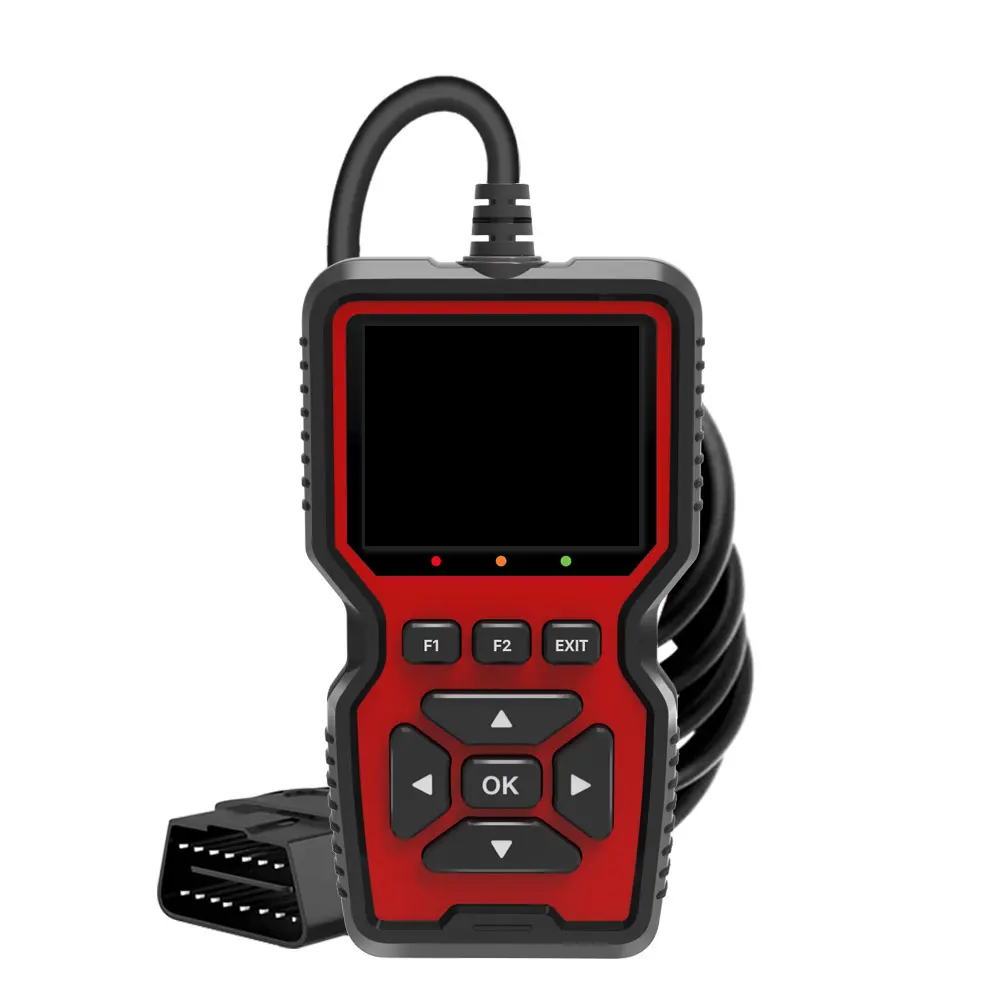
Diagnosis of P0431 requires a systematic approach, often involving a high-quality OBD-II scan tool and a Digital Multimeter (DMM).
- Retrieve All DTCs: Use an OBD-II scanner to read all active and pending diagnostic trouble codes. Address any related codes first, especially misfire codes, O2 sensor codes (P0150-P0161 range for Bank 2), or fuel trim codes, as these can be root causes.
- Visual Inspection:
- Inspect the catalytic converter for physical damage, rust, or signs of overheating (discoloration).
- Check the entire exhaust system on Bank 2 for leaks, especially near the O2 sensors and the manifold.
- Examine the wiring harnesses and connectors for both upstream and downstream O2 sensors on Bank 2 for damage, corrosion, or proper seating.
- Look for signs of engine oil or coolant leaks that could contaminate the exhaust.
- OBD-II Live Data Analysis:
- O2 Sensor Voltages: Monitor Bank 2, Sensor 1 (upstream) and Bank 2, Sensor 2 (downstream) O2 sensor voltages. The upstream sensor should rapidly switch between approximately 0.1V and 0.9V. The downstream sensor, with a healthy catalyst, should show a relatively stable, higher voltage (e.g., 0.5V-0.7V) and switch much slower and with significantly less amplitude than the upstream sensor. If the downstream sensor mirrors the upstream sensor’s activity, the catalyst is likely inefficient.
- Fuel Trims (STFT & LTFT): Analyze Short Term Fuel Trim (STFT) and Long Term Fuel Trim (LTFT) for Bank 2. Excessive positive or negative trims can indicate fuel delivery issues, vacuum leaks, or MAF sensor problems that can damage the catalyst or cause an incorrect air/fuel mixture.
- Misfire Counters: Check for any active or historical misfires on Bank 2 cylinders.
- Catalyst Monitor Test: If your scanner allows, initiate a catalyst monitor test to observe the PCM’s assessment of efficiency.
- O2 Sensor Testing with DMM: While running, back-probe the signal wire of both Bank 2 O2 sensors with a DMM to verify sensor response and voltage ranges. Also, check the O2 sensor heater circuit resistance and voltage supply. A non-functional heater can delay sensor activation and impact warm-up efficiency.
- Exhaust System Smoke Test: Use a smoke machine to introduce smoke into the exhaust system to identify any leaks that could skew O2 sensor readings.
- Infrared Thermometer Test: With the engine at operating temperature, use an infrared thermometer to measure the temperature of the exhaust pipe just before and immediately after the catalytic converter on Bank 2. A properly functioning catalyst should exhibit a temperature increase of 50-100°F (30-55°C) after the converter due to the exothermic chemical reactions occurring within. If the temperatures are similar or if the post-catalyst temperature is lower, the catalyst is not efficient. Exercise extreme caution, as exhaust components will be extremely hot.
- Exhaust Backpressure Test: If reduced engine performance is a symptom, thread an exhaust backpressure gauge into the upstream O2 sensor bung on Bank 2. Excessive backpressure (typically above 1.5-2.0 psi at 2500 RPM) indicates a restricted or clogged catalytic converter.
Recommended Repairs and Solutions
The correct repair for P0431 hinges on accurately identifying the root cause. Simply replacing the catalytic converter without addressing underlying issues will likely result in the code returning.
- Address Underlying Engine or Fuel System Issues: This is the most crucial step.
- Repair any exhaust leaks affecting Bank 2.
- Replace faulty upstream or downstream oxygen sensors on Bank 2 if testing confirms their malfunction.
- Diagnose and repair any engine misfires (e.g., replace spark plugs, ignition coils, fuel injectors, or address compression issues).
- Correct fuel system issues leading to rich or lean conditions (e.g., clean or replace the MAF sensor, repair vacuum leaks, replace faulty fuel injectors).
- Repair any internal engine oil or coolant leaks that are contaminating the exhaust system.
- Catalytic Converter Replacement: If, after thorough diagnosis, all other contributing factors have been ruled out or repaired, and the catalytic converter itself is confirmed to be inefficient, replacement is necessary.
- Ensure the replacement catalytic converter is a direct-fit, OEM-grade, or equivalent aftermarket unit that meets the vehicle’s specific emissions standards (e.g., CARB compliant in some regions).
- Always use new gaskets and hardware during installation to prevent exhaust leaks.
- PCM Software Update: In rare cases, especially if a Technical Service Bulletin (TSB) from the vehicle manufacturer exists for P0431, a PCM software update or reflash may be necessary to optimize catalyst monitoring parameters.