What Does Code P1104 Mean?
Diagnostic Trouble Code (DTC) P1104 is a manufacturer-specific code, commonly observed in General Motors (GM) vehicles, indicating an issue with the Mass Air Flow (MAF) sensor’s ground circuit integrity. The Engine Control Module (ECM), also known as the Powertrain Control Module (PCM), relies on the MAF sensor to accurately measure the volume and density of air entering the engine. This measurement is critical for calculating precise fuel delivery, ignition timing, and even transmission shift points. When the ECM detects that the MAF sensor’s dedicated ground reference voltage is outside of its predetermined operational range (e.g., excessively high, indicating resistance in the ground circuit, or an open circuit), or if the ground signal is inconsistent or missing, it interprets this as a MAF ground malfunction and sets code P1104. This directly compromises the ECM’s ability to maintain optimal air-fuel ratio and overall engine performance.
Common Symptoms
- Illuminated Check Engine Light (CEL): The most direct indicator.
- Rough Idle: Engine may run unevenly, particularly at low RPMs.
- Stalling: Engine may stall, especially during cold starts or deceleration.
- Reduced Engine Performance: Noticeable lack of power, sluggish acceleration, or hesitation.
- Poor Fuel Economy: Inaccurate air-fuel mixture leading to inefficient combustion.
- Black Smoke from Exhaust: Potentially a rich fuel condition if the ECM misinterprets low or erratic MAF signals.
- Difficulty Starting: Engine may crank but struggle to fire up or maintain ignition.
What Causes the Code P1104?
- Damaged or Corroded Wiring: The primary cause, affecting the dedicated ground wire for the MAF sensor, leading to excessive resistance or an open circuit.
- Faulty MAF Sensor Connector: Poor pin tension, bent pins, or corrosion within the electrical connector itself, disrupting the ground path.
- Corroded or Loose Ground Points: A deteriorated connection at a chassis or engine ground point shared by the MAF sensor circuit.
- Internal MAF Sensor Ground Failure: While less common than wiring issues, an internal defect within the MAF sensor can compromise its ground circuit.
- ECM/PCM Ground Issue: In rare instances, an internal ground fault within the ECM/PCM affecting the MAF sensor’s reference ground.
How to Diagnose and Troubleshoot
A systematic diagnostic approach is essential for accurately resolving P1104:
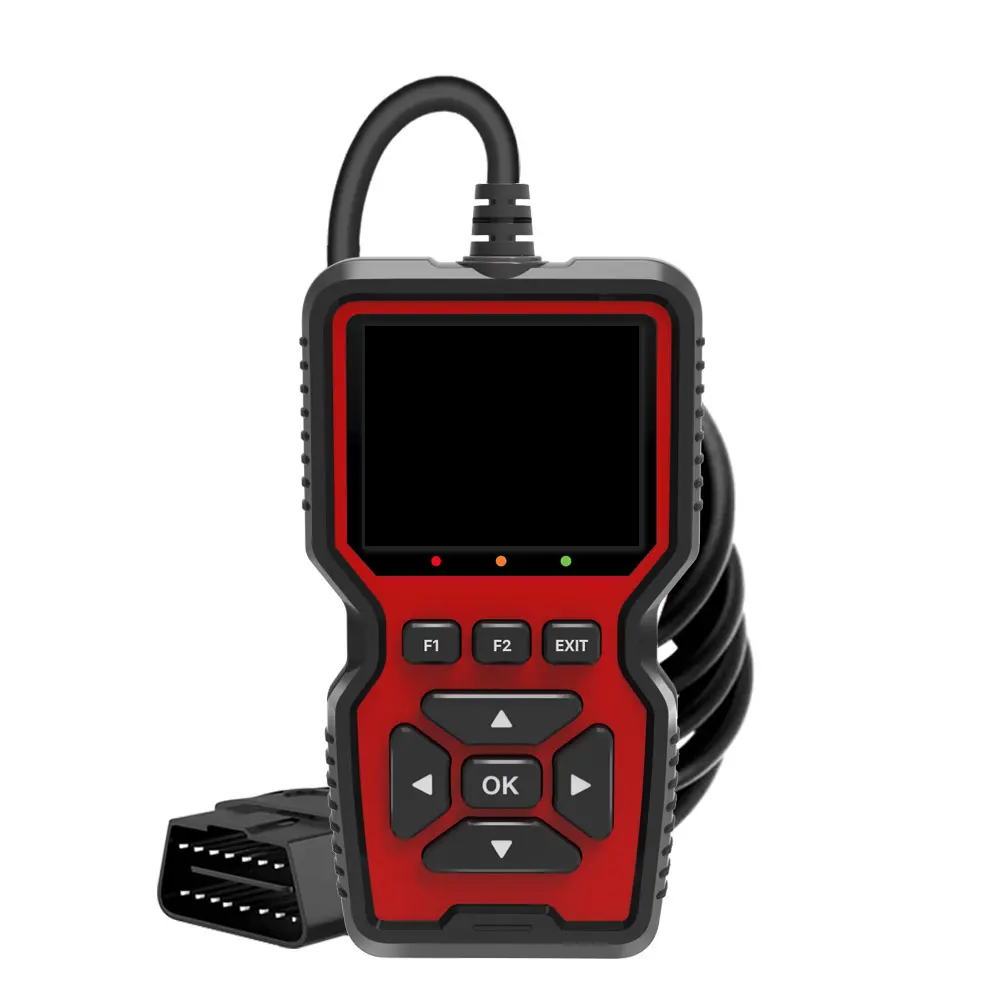
- Retrieve & Analyze DTCs and Freeze Frame Data: Connect an OBD-II scanner to the vehicle. Record the P1104 code and any other associated DTCs. Crucially, review the freeze frame data, which captures engine parameters at the moment the code was set. This can provide valuable clues about engine speed, load, and temperature conditions when the ground malfunction occurred.
- Visual Inspection:
- Begin with a thorough visual inspection of the MAF sensor and its wiring harness. Look for any signs of physical damage, chafing, corrosion, or modifications. Pay close attention to the MAF sensor connector for bent pins, corrosion, or loose terminals.
- Trace the MAF sensor harness back to its main loom, looking for any stress points or areas where it might have been pinched or abraded.
- Identify and inspect the main engine and chassis ground points. Look for any signs of rust, corrosion, or loose fasteners that could compromise ground integrity.
- Live Data Analysis (OBD-II Scanner):
- With the engine running (if possible), monitor the MAF sensor’s live data stream. Observe the Grams/Second (g/s) or Pounds/Minute (lb/min) readings at idle and during gradual acceleration.
- A healthy MAF sensor should show stable, consistent readings that increase smoothly with engine RPM. An erratic, abnormally low, fixed, or zero reading, especially when accompanied by engine performance issues, strongly suggests a MAF sensor or circuit fault.
- Perform a “wiggle test” on the MAF sensor connector and harness while monitoring live data. Any sudden fluctuations or drop-outs in the MAF reading indicate an intermittent connection issue.
- Digital Multimeter (DMM) Testing: (Refer to vehicle-specific wiring diagrams for pinouts and expected voltages/resistances)
- Ground Circuit Voltage Drop Test (Key ON, Engine OFF): Disconnect the MAF sensor. Identify the ground wire for the MAF sensor at the connector. Connect the negative lead of your DMM to the battery negative terminal and the positive lead to the MAF sensor’s ground terminal (back-probe if the sensor needs to be connected). Turn the ignition to the ON position. You should read very close to 0 volts (ideally less than 50mV). A higher voltage indicates excessive resistance in the ground circuit.
- Continuity Test (Key OFF): Disconnect the MAF sensor. Using the DMM in resistance (ohms) mode, check for continuity between the MAF sensor’s ground terminal at the connector and a known good chassis ground point or the battery negative terminal. Resistance should be extremely low, typically less than 0.5 ohms. High resistance or an open circuit (OL) confirms a ground wire fault.
- Power Supply Test (Key ON, Engine OFF): While P1104 specifically points to ground, it’s good practice to verify the MAF sensor is receiving proper power. Identify the MAF sensor’s power supply wire (typically 12V or 5V, depending on the sensor design) and measure the voltage relative to battery negative.
Recommended Repairs and Solutions
Based on the diagnostic findings, the following repairs are typically recommended:
- Repair or Replace Damaged Wiring: The most frequent resolution. If the MAF sensor ground wire is chafed, corroded, or open, carefully repair the section using high-quality automotive-grade wire of the correct gauge. Solder connections and use heat-shrink tubing for environmental protection. Avoid butt connectors where possible; direct soldering offers superior long-term reliability.
- Clean and Secure Ground Points: If a corroded or loose chassis/engine ground point is identified, remove the fastener, clean the mating surfaces thoroughly with a wire brush or sandpaper, and re-secure with the proper torque. Apply dielectric grease to prevent future corrosion.
- Replace MAF Sensor Connector: If the MAF sensor connector itself has corroded terminals, bent pins, or poor wire retention, replace the connector pigtail. Ensure the new connections are robust and weather-sealed.
- Replace MAF Sensor: If wiring and ground circuit integrity are confirmed to be within specifications, and all DMM tests indicate no external ground fault, the MAF sensor itself may have an internal ground circuit failure. In this scenario, replace the MAF sensor with an OEM-quality component. Be cautious of inexpensive aftermarket sensors, as they can sometimes introduce new, subtle issues.
- ECM/PCM Inspection/Repair: This is a last resort. Only consider ECM/PCM issues if all other components and wiring have been meticulously tested and confirmed good, and the issue persists. ECM ground failures are rare for isolated sensor circuits and usually manifest with broader electrical problems.
- Post-Repair Verification: After performing any repairs, clear all DTCs using an OBD-II scanner. Conduct a comprehensive test drive under various load and speed conditions to ensure the P1104 code does not return and that the engine operates smoothly with stable MAF sensor readings and appropriate fuel trims.