What Does Code P1426 Mean?
DTC P1426 signifies that the Engine Control Module (ECM), also known as the Powertrain Control Module (PCM), has detected a Mass Air Flow (MAF) sensor signal that is outside of its expected operating range. The “EGI Mini” prefix often refers to a specific Electronic Gasoline Injection system, typically found in certain Asian vehicle manufacturers, where “Mini” might denote a particular engine variant or system configuration. In essence, the ECM monitors the MAF sensor’s output (either a voltage signal or a frequency signal, depending on sensor type) to determine the volume and density of air entering the engine. This data is critical for calculating precise fuel injection pulse width, ignition timing, and even automatic transmission shift points.
When P1426 is set, the ECM has determined that the MAF sensor’s reading is either excessively high or remarkably low compared to what it anticipates for the current engine operating conditions (e.g., engine RPM, throttle position, engine load, barometric pressure, intake air temperature). This incongruity suggests a fundamental discrepancy in the MAF sensor’s output, leading the ECM to conclude the sensor data is unreliable or the system itself has an air metering fault. The subsystem primarily affected is the engine’s entire air-fuel management, as inaccurate airflow data results in incorrect fuel delivery, potentially leading to lean or rich conditions, and suboptimal engine performance.
Common Symptoms
- Check Engine Light (CEL) Illumination: The most immediate and obvious symptom.
- Reduced Engine Performance: Noticeable lack of power, poor acceleration, or hesitation during acceleration.
- Rough Idling: The engine may stumble, shake, or have an unstable idle speed.
- Poor Fuel Economy: Inaccurate air metering can lead to the ECM over-fueling or under-fueling the engine.
- Stalling: Particularly at idle or when coming to a stop.
- Difficulty Starting: Especially when the engine is warm.
- Black Smoke from Exhaust: Indicative of a rich fuel condition due to the ECM receiving an erroneously low MAF reading and consequently overcompensating with too much fuel. (Less common for this code directly, but possible if the ECM interprets the out-of-range as a severe underrange).
What Causes the Code P1426?
- Faulty Mass Air Flow (MAF) Sensor: The sensor itself has failed internally, providing inaccurate or erratic readings.
- Contaminated MAF Sensor: Dirt, oil residue (from aftermarket air filters or PCV system issues), or debris accumulating on the hot wire or film element can disrupt accurate airflow measurement.
- Wiring Harness Issues: Open circuits, short circuits, or high resistance in the MAF sensor’s power supply, ground, or signal return wires. This includes damaged insulation, corrosion in connectors, or loose terminals.
- Vacuum Leaks: Unmetered air entering the intake manifold downstream of the MAF sensor can cause the ECM to detect a lower airflow than what is actually entering the engine, creating a discrepancy and an “out of range” condition in comparison to expected engine load.
- Intake Air Obstruction: A severely clogged air filter or restriction within the air intake ducting can limit actual airflow, leading the MAF sensor to read an unexpectedly low value relative to engine demand.
- Exhaust System Leaks (Pre-Catalyst): While less direct, a significant exhaust leak before the primary oxygen sensor can influence fuel trims, causing the ECM to misinterpret the overall air-fuel mixture and potentially flag a MAF inconsistency.
- ECM Malfunction: Although rare, an internal failure within the Engine Control Module itself could lead to misinterpretation of the MAF sensor signal or incorrect calculation of expected range values.
How to Diagnose and Troubleshoot
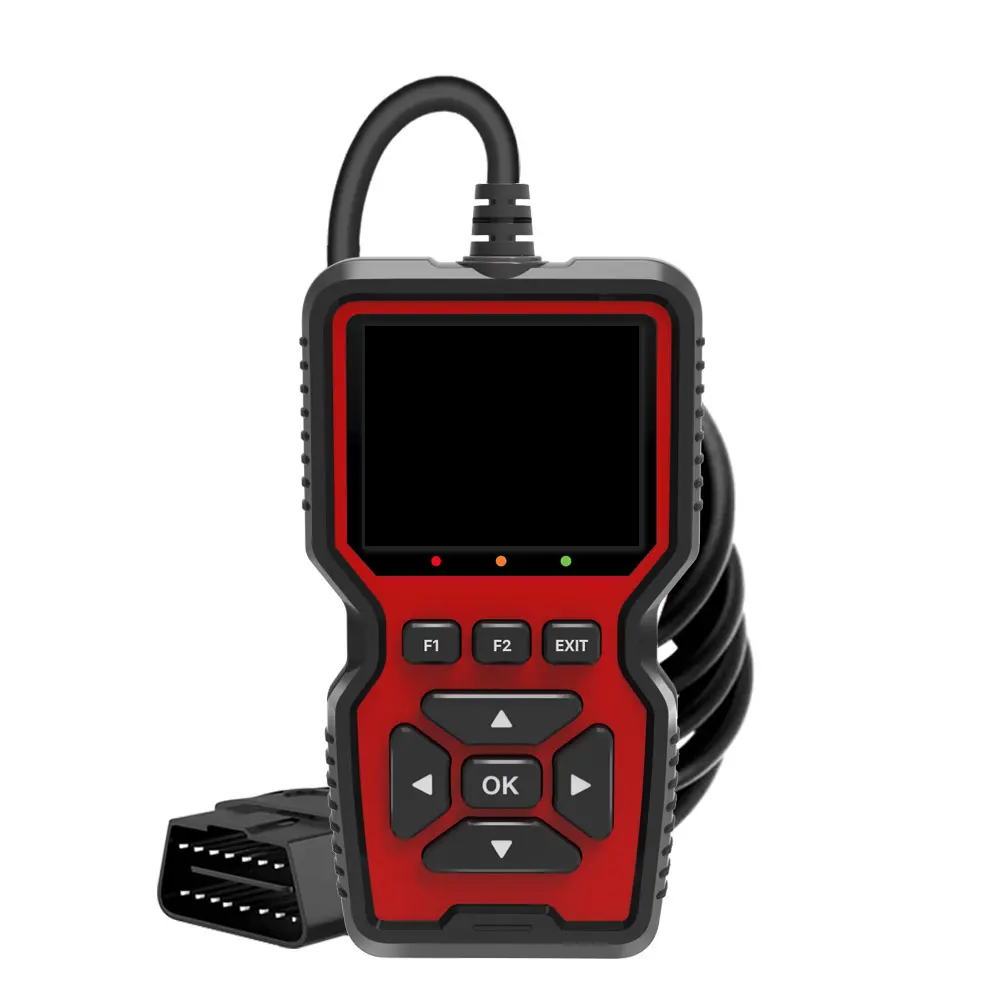
Effective diagnosis of P1426 requires a systematic approach, leveraging an OBD-II scan tool and a digital multimeter (DMM).
- Preliminary Visual Inspection:
- Inspect the air filter for excessive contamination or blockages.
- Examine the entire air intake system, from the air filter housing to the throttle body, for any cracks, loose clamps, or disconnected hoses that could indicate unmetered air entry (vacuum leaks).
- Check the MAF sensor’s electrical connector for damage, corrosion, or pushed-out pins. Inspect the MAF sensor wiring harness for any signs of chafing, cuts, or heat damage.
- Connect an OBD-II scan tool and monitor the MAF sensor’s live data stream (typically displayed in grams/second (g/s) or voltage).
- At a fully warmed-up idle, expect MAF readings to be approximately 2-5 g/s, varying slightly by engine displacement. Note this value.
- Perform a gradual acceleration to wide-open throttle (WOT) and observe the MAF reading. It should increase smoothly and linearly with engine RPM and load. A sudden drop, erratic fluctuations, or readings that remain static suggest a sensor or wiring issue.
- Simultaneously monitor Short Term Fuel Trim (STFT) and Long Term Fuel Trim (LTFT). If the MAF sensor is reading low, the ECM may add fuel, resulting in high positive fuel trims. If it’s reading high, the ECM may remove fuel, resulting in high negative fuel trims.
- Cross-reference MAF readings with Engine RPM, Throttle Position Sensor (TPS) percentage, and Engine Coolant Temperature (ECT) to ensure other critical sensors are providing plausible data.
- With the ignition ON, engine OFF, back-probe the MAF sensor connector to check for proper power supply (typically 12V or 5V, reference service manual) and a solid ground connection.
- Back-probe the MAF signal wire with the engine running at idle. For a voltage-output MAF, expect a base voltage (e.g., 0.5-1.5V) at idle, increasing smoothly with engine RPM. For a frequency-output MAF, an oscilloscope or a DMM with frequency measurement is required to observe a stable frequency at idle that increases with RPM. Compare these readings to the manufacturer’s specifications.
- Perform a voltage drop test on the power and ground circuits to rule out high resistance.
- With the ECM connector unplugged and the MAF sensor disconnected, check for continuity and resistance in the MAF signal, power, and ground wires from the MAF connector to the ECM connector. Look for open circuits or shorts to ground/power.
- Utilize a smoke machine to introduce smoke into the intake manifold system. Observe for smoke escaping from vacuum hoses, intake manifold gaskets, PCV system components, or other intake tract connections.
- If contamination is suspected, carefully remove the MAF sensor and clean the sensing elements using only a specialized MAF sensor cleaner. Allow it to air dry completely before reinstalling. Never use carburetor cleaner or other harsh solvents. Re-evaluate live data after cleaning.
Recommended Repairs and Solutions
- Repair or Replace Wiring/Connectors: If diagnostic tests reveal any issues with the MAF sensor’s electrical circuit, repair or replace the damaged wiring harness sections or connectors. Ensure all connections are clean, secure, and free of corrosion.
- Clean MAF Sensor: For contaminated sensors, cleaning with a dedicated MAF sensor cleaner often resolves the issue. This should always be attempted before full replacement, provided the sensor itself isn’t internally failed.
- Replace MAF Sensor: If cleaning does not resolve the P1426 code, and DMM testing confirms a faulty sensor, replacement is necessary. It is highly recommended to use an Original Equipment Manufacturer (OEM) or reputable OEM-quality aftermarket MAF sensor. Cheap aftermarket sensors are notorious for causing persistent, intermittent, or new air-fuel metering issues.
- Repair Vacuum Leaks: Address any detected vacuum leaks by replacing cracked vacuum hoses, intake manifold gaskets, throttle body gaskets, PCV valve, or other compromised components in the intake system.
- Replace Air Filter: If the air filter is found to be excessively dirty or obstructed, replace it to ensure proper airflow.
- ECM Reprogramming/Replacement: This is a last resort and typically only considered after all other potential causes have been thoroughly investigated and ruled out. An ECM malfunction directly causing P1426 is rare but possible.
- Clear DTCs and Verify Repair: After any repair, clear the DTCs from the ECM memory. Perform a comprehensive drive cycle under various load conditions and monitor MAF live data and fuel trims to ensure the code does not return and engine performance is restored.