
Only the first generation of the Scorpio model, which was well-liked in the European market, had the 2.9-liter V6 Ford BRF engine, which was manufactured at a plant in Germany between 1986 and 1994. Modifications of this motor with minor variations are denoted by the symbols BRC, BRD, and BRE.
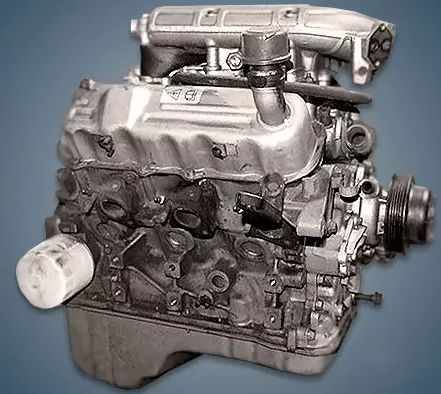
Cologne V6 family: BRF, 99E, 99X.
Specifications
| Production years | 1986 – 1994 |
| Displacement, cc | 2935 |
| Fuel system | distributed injection |
| Power output, hp | 145 |
| Torque output, Nm | 222 |
| Cylinder block | cast iron V6 |
| Block head | aluminum 12v |
| Cylinder bore, mm | 93 |
| Piston stroke, mm | 72 |
| Compression ratio | 9.0 |
| Features | OHV |
| Hydraulic lifters | yes |
| Timing drive | chain |
| Phase regulator | no |
| Turbocharging | no |
| Recommended engine oil | 10W-40 |
| Engine oil capacity, liter | 4.5 |
| Fuel type | petrol |
| Euro standards | EURO 1/2 |
| Fuel consumption, L/100 km (for Ford Scorpio 1990) — city — highway — combined |
15.2 7.5 10.7 |
| Engine lifespan, km | ~350 000 |
| Weight, kg | 204 |
The engine was installed on:
- Ford Scorpio 1 in 1986 – 1994.
Disadvantages of the Ford BRF engine
The majority of the issues with this dependable and highly inventive engine are caused by aging.
Frequent lubricant leaks on gaskets and seals account for the majority of complaints.
Hydraulic compensators can begin to knock after 150–200 thousand kilometers and are not tolerant of cheap oils.
Wear of the valve guides occurs frequently after 200–250 thousand kilometers.
The chain that connects the crankshaft and camshaft is long-lasting and changes after about 300,000 kilometers.