
Only the fourth generation of the Transit model was equipped with the 2.0-liter Ford D3FA or 2.0 TDDi Duratorq DI engine, which was manufactured between 2000 and 2006. The company’s diesel family’s weakest modification lacked an intercooler altogether.
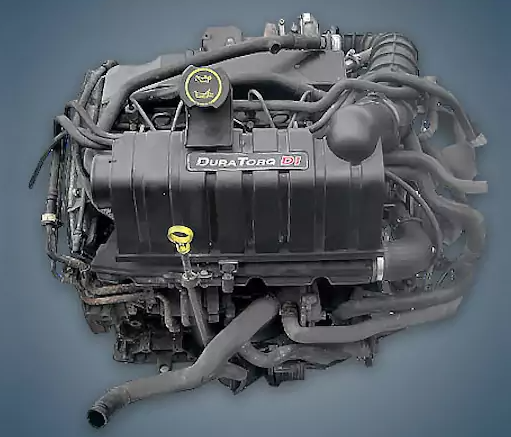
The D5BA, D6BA, and FXFA internal combustion engines are also part of the Duratorq-DI line.
The engine was installed on:
- Ford Transit Mk6 in 2000 – 2006.
Specifications
| Production years | 2000-2006 |
| Displacement, cc | 1998 |
| Fuel system | direct injection |
| Power output, hp | 75 |
| Torque output, Nm | 185 |
| Cylinder block | cast iron R4 |
| Block head | aluminum 16v |
| Cylinder bore, mm | 86 |
| Piston stroke, mm | 86 |
| Compression ratio | 19.0 |
| Features | no |
| Hydraulic lifters | yes |
| Timing drive | double row chain |
| Phase regulator | no |
| Turbocharging | yes |
| Recommended engine oil | 5W-30 |
| Engine oil capacity, liter | 6.4 |
| Fuel type | diesel |
| Euro standards | EURO 3 |
| Fuel consumption, L/100 km (for Ford Transit 2001) — city — highway — combined |
10.1 7.6 8.9 |
| Engine lifespan, km | ~320 000 |
Disadvantages of the D3FA engine
Continuous drops in traction occur as soon as the contamination reaches the injectors; the Bosch VP30 high pressure fuel pump dislikes fuel impurities and eventually starts to drive chips;
The camshaft beds are responsible for the relatively quick wear in this area;
The timing chain mechanism may need maintenance on runs of 100–150 thousand kilometers; loud knocking beneath the hood typically indicates a broken upper connecting rod bushing.