
Only the second generation of the Kuga crossover was equipped with the Ford JQMA or Kuga 2 1.6 EcoBoost 1.6-liter turbo engine, which was assembled between 2012 and 2016 before being restyled. Due to an ineffective cooling system, this motor was the subject of several recall campaigns.
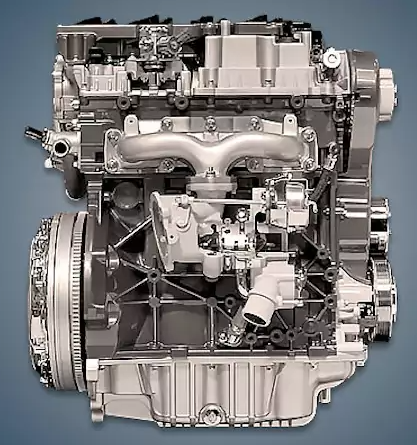
Internal combustion engines JTMA, JQDA, and JTBA are also part of the 1.6 EcoBoost line.
The engine was installed on:
- Ford Kuga Mk2 in 2012 – 2016.
Specifications
| Production years | 2012-2016 |
| Displacement, cc | 1596 |
| Fuel system | direct injection |
| Power output, hp | 150 |
| Torque output, Nm | 240 |
| Cylinder block | aluminum R4 |
| Block head | aluminum 16v |
| Cylinder bore, mm | 79 |
| Piston stroke, mm | 81.4 |
| Compression ratio | 10.1 |
| Features | DOHC |
| Hydraulic lifters | no |
| Timing drive | belt |
| Phase regulator | at inlet and outlet |
| Turbocharging | BorgWarner KP39 |
| Recommended engine oil | 5W-20 |
| Engine oil capacity, liter | 3.8 |
| Fuel type | petrol |
| Euro standards | EURO 5/6 |
| Fuel consumption, L/100 km (for Ford Kuga 2014) — city — highway — combined |
8.7 5.7 6.8 |
| Engine lifespan, km | ~240 000 |
Disadvantages of the JQMA engine
A malfunctioning electromagnetic clutch in the cooling system was the primary cause of multiple recall campaigns related to power unit ignition;
The cylinder head frequently develops cracks as a result of overheating, particularly near the valve seats;
Intake valves coke and direct injection nozzles clog easily; because there are no hydraulic lifters, the valve clearance needs to be changed on a regular basis.