
Only the American version of the well-liked sixth-generation Mustang coupe was equipped with the 2.3-liter Ford N38H or 2.3 EcoBoost engine, which was manufactured in Ohio between 2014 and 2017. This turbo engine has an export version with 317 horsepower, designated N48H.
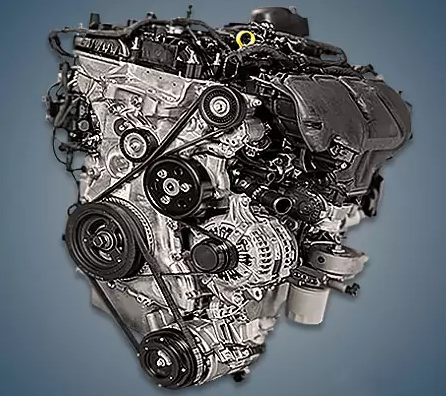
2.3 EcoBoost Family: N38H, YVDA.
Specifications
| Production years | 2014-2017 |
| Displacement, cc | 2264 |
| Fuel system | direct injection |
| Power output, hp | 314 |
| Torque output, Nm | 434 |
| Cylinder block | aluminum R4 |
| Block head | aluminum 16v |
| Cylinder bore, mm | 87.5 |
| Piston stroke, mm | 94 |
| Compression ratio | 9.5 |
| Features | DOHC |
| Hydraulic lifters | no |
| Timing drive | chain |
| Phase regulator | Ti-VCT |
| Turbocharging | Garrett MGT2260SZ |
| Recommended engine oil | 5W-30 |
| Engine oil capacity, liter | 5.4 |
| Fuel type | petrol |
| Euro standards | EURO 6 |
| Fuel consumption, L/100 km (for Ford Mustang 2.3 EcoBoost 2015) — city — highway — combined |
11.2 7.8 9.8 |
| Engine lifespan, km | ~250 000 |
| Weight, kg | 150 |
The engine was installed on:
- Ford Mustang 6 (S550) in 2014 – 2017.
Disadvantages of the N38H engine
The fuel sensor, turbine sensor, oil separator, and canister purge valve must all be replaced for this engine to run smoothly. It is also advised to swap out the expansion tank cap for a non-original one.
Like all direct injection units, it is susceptible to carbon deposits on the valves; leaky pipes and leaks along the front timing cover cause a lot of problems; the cylinder head gasket may frequently burst during active driving, but there is a fix.