
The Ford RVA, also known as the 1.8 Endura-DE, is a 1.8-liter diesel engine that was built between 1995 and 1998. It was installed on the sixth generation of Escort models, though it is sometimes referred to as the seventh. Although the motor was not well-known for its dependability, it was easy to repair and had a straightforward design.
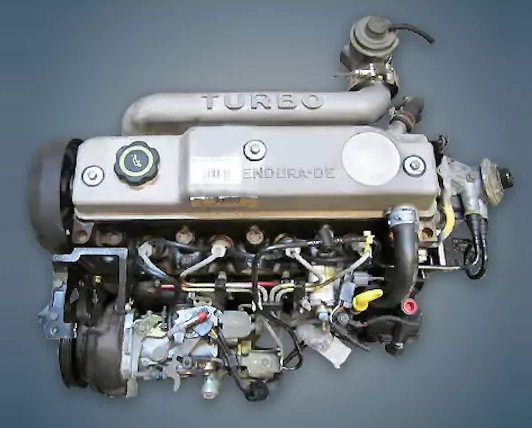
The RTK, RFA, and RFN internal combustion engines are also part of the Endura-DE line.
The engine was installed on:
- Ford Escort Mk6 in 1995 – 1998.
Specifications
| Production years | 1995-1998 |
| Displacement, cc | 1753 |
| Fuel system | prechamber |
| Power output, hp | 70 |
| Torque output, Nm | 135 |
| Cylinder block | cast iron R4 |
| Block head | cast iron 8v |
| Cylinder bore, mm | 82.5 |
| Piston stroke, mm | 82 |
| Compression ratio | 21.5 |
| Features | no |
| Hydraulic lifters | no |
| Timing drive | belt |
| Phase regulator | no |
| Turbocharging | yes |
| Recommended engine oil | 5W-40 |
| Engine oil capacity, liter | 5.1 |
| Fuel type | diesel |
| Euro standards | EURO 1 |
| Fuel consumption, L/100 km (for Ford Escort 1997) — city — highway — combined |
8.5 5.5 6.7 |
| Engine lifespan, km | ~210 000 |
Disadvantages of the Ford RVA engine
The timing belt has a very small resource, and the valve always bends when it breaks;
Additionally, a lot of owners express dissatisfaction over their cars’ inability to start in extremely cold weather.
There is a weak spot where the upper and lower sections of the block meet, and the motor has oil leaks;
The fourth cylinder’s rings wear down quickly due to this lack of cooling;
Numerous instances of crankshaft destruction or breakdown from the supports are reported on specialized forums.