
The second generation of the well-liked Sierra model was equipped with the 1.8-liter Ford RFA/RFB or 1.8 Endura-DE engine, which was manufactured between 1990 and 1993. This power unit had a poor reputation due to its poor dependability.
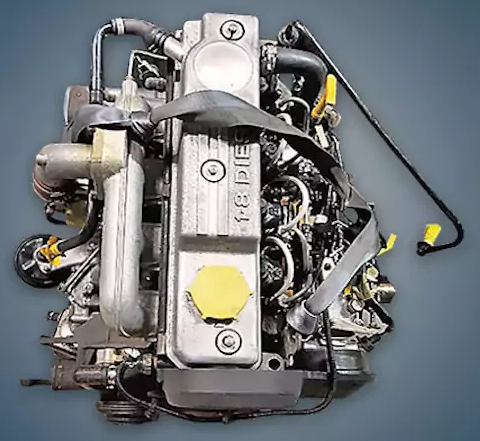
Internal combustion engines (RTK, RVA, and RFN) are also part of the Endura-DE line.
The engine was installed on:
- Ford Sierra Mk2 in 1990 – 1993.
Specifications
| Production years | 1990-1993 |
| Displacement, cc | 1753 |
| Fuel system | prechamber |
| Power output, hp | 75 |
| Torque output, Nm | 152 |
| Cylinder block | cast iron R4 |
| Block head | cast iron 8v |
| Cylinder bore, mm | 82.5 |
| Piston stroke, mm | 82 |
| Compression ratio | 21.5 |
| Features | no |
| Hydraulic lifters | no |
| Timing drive | belt |
| Phase regulator | no |
| Turbocharging | Garrett |
| Recommended engine oil | 5W-40 |
| Engine oil capacity, liter | 5.0 |
| Fuel type | diesel |
| Euro standards | EURO 1 |
| Fuel consumption, L/100 km (for Ford Sierra 1991) — city — highway — combined |
8.7 4.9 6.4 |
| Engine lifespan, km | ~220 000 |
Disadvantages of the Ford RFA/RFB engine
The timing belt’s limited resource frequently causes it to break and bend the valves;
Unstable operation during severe frosts is the second most common issue.
Oil spills happen frequently, usually at the intersection of the block’s upper and lower sections;
Ring wear in the engine’s fourth cylinder is a common problem for Sierra owners;
This unit’s benefit may be its lack of demand for fuel quality.