
The second generation of the Chevrolet Volt hybrid and its Chinese equivalent, the Buick Velite, were equipped with the 1.5-liter General Motors L3A engine, which was manufactured at the company’s facility between 2015 and 2019. The license was sold to MG for use on its vehicle following the conclusion of the release.
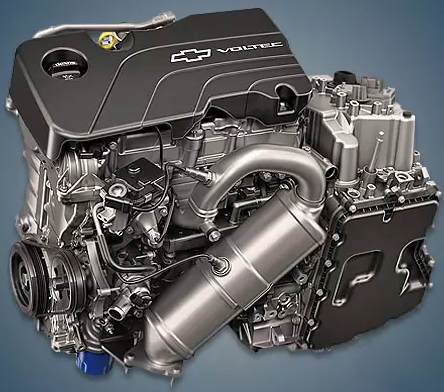
The LV7, LE2, L3A, LFV, LSD, and LYX are small gasoline engines.
Specifications
| Production years | 2015-2019 |
| Displacement, cc | 1490 |
| Fuel system | direct injection |
| Power output, hp | 101 – 106 |
| Torque output, Nm | 138 – 140 |
| Cylinder block | aluminum R4 |
| Block head | aluminum 16v |
| Cylinder bore, mm | 74 |
| Piston stroke, mm | 86.6 |
| Compression ratio | 12.5 |
| Features | DOHC |
| Hydraulic lifters | yes |
| Timing drive | chain |
| Phase regulator | Dual VVT |
| Turbocharging | no |
| Recommended engine oil | 0W-20 |
| Engine oil capacity, liter | 4.0 |
| Fuel type | petrol |
| Euro standards | EURO 6 |
| Fuel consumption, L/100 km (for Chevrolet Volt 2018) — city — highway — combined |
6.3 5.0 5.6 |
| Engine lifespan, km | ~300 000 |
| Weight, kg | 108 |
The engine was installed on:
- Chevrolet Volt 2 (D2UX) in 2015 – 2019.
Disadvantages of the GM L3A engine
There aren’t many complaints about this motor on specialized forums, and it is incredibly dependable.
Only strict standards for the fuel’s quality should be mentioned.
Bad gasoline destroys the catalyst and allows its crumbs to enter the cylinders.
It has carbon buildup on the intake valves, just like all direct injection engines.
New firmware is being used to address the remaining issues, which are caused by electrical glitches.