
Since 2019, the company’s factory has been assembling the 2.0-liter Great Wall GW4C20B turbo engine, which is installed on the Chinese Poer pickup truck and, starting in 2021, on Haval H9 SUVs. This gasoline engine meets Euro 6 environmental requirements because it has a particulate filter.
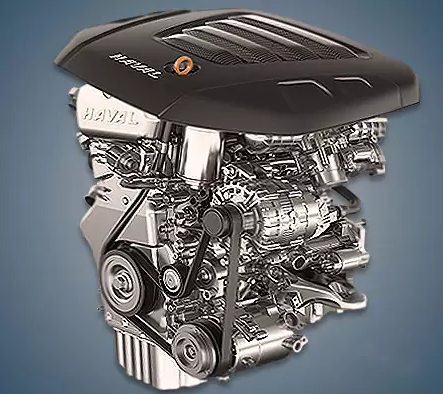
GW4C20, GW4C20A, GW4C20B, and GW4C20NT are your own 2.0-liter engines.
Specifications
| Production years | since 2019 |
| Displacement, cc | 1967 |
| Fuel system | direct injection |
| Power output, hp | 218 |
| Torque output, Nm | 380 |
| Cylinder block | cast iron R4 |
| Block head | aluminum 16v |
| Cylinder bore, mm | 82.5 |
| Piston stroke, mm | 92 |
| Compression ratio | 9.6 |
| Features | DOHC |
| Hydraulic lifters | yes |
| Timing drive | chain |
| Phase regulator | on both shafts |
| Turbocharging | yes |
| Recommended engine oil | 5W-30 |
| Engine oil capacity, liter | 5.5 |
| Fuel type | petrol |
| Euro standards | EURO 6 |
| Fuel consumption, L/100 km (for Haval H9 2021) — city — highway — combined |
12.6 9.4 10.3 |
| Engine lifespan, km | ~230 000 |
| Weight, kg | 180 (with attachments) |
The engine was installed on:
- Great Wall Pao since 2019;
- Haval H9 I since 2021.
Disadvantages of the Great Wall GW4C20B engine
There haven’t been any significant complaints about this engine as of yet.
Deposits on intake valves affect all units that use direct fuel injection.
The series’ motors frequently experience a power drop as a result of burst pipes.
An intriguing particulate filter resource that is unusual for Chinese gasoline engines.