
The popular F7 crossover and the comparable F7x are equipped with the 1.5-liter Great Wall GW4B15A engine, which has been manufactured at a facility in China since 2020. The turbine and 350 bar injection system of this turbo engine are different from those of its predecessor.
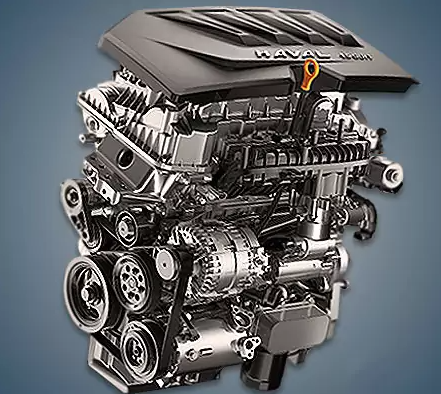
GW4B15, GW4B15A, and GW4B15D are your own 1.5-liter engines.
Specifications
| Production years | since 2020 |
| Displacement, cc | 1499 |
| Fuel system | direct injection |
| Power output, hp | 150 – 170 |
| Torque output, Nm | 280 – 285 |
| Cylinder block | aluminum R4 |
| Block head | aluminum 16v |
| Cylinder bore, mm | 76 |
| Piston stroke, mm | 82.6 |
| Compression ratio | 9.6 |
| Features | CVVL |
| Hydraulic lifters | yes |
| Timing drive | chain |
| Phase regulator | on both shafts |
| Turbocharging | yes |
| Recommended engine oil | 0W-30 |
| Engine oil capacity, liter | 4.0 |
| Fuel type | petrol |
| Euro standards | EURO 5 |
| Fuel consumption, L/100 km (for Haval F7x 2021) — city — highway — combined |
10.7 6.8 8.2 |
| Engine lifespan, km | ~220 000 |
| Weight, kg | 115 |
The engine was installed on:
- Haval F7 I since 2020;
- Haval F7x I since 2020;
- Haval Dargo I since 2020.
Disadvantages of the Great Wall GW4B15A engine
The engine has currently shown itself to be reliable, and there aren’t many malfunctions;
Because of carbon buildup on the valves, they frequently only complain about floating engine speeds;
The fuel pump and ignition system are the service station’s weak points;
A burst pipe has caused turbine failures for some owners.