
Since 2018, a Chinese factory has been assembling the 1.5-liter Great Wall GW4B15 turbo engine, which is installed on the most popular F7 and F7x crossovers in the group. In 2020, the updated GW4B15A unit replaced such a turbo engine in some markets.
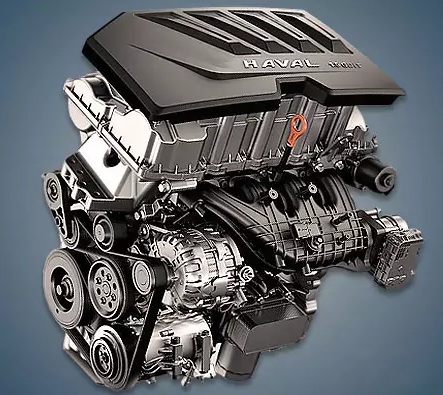
GW4B15, GW4B15A, and GW4B15D are your own 1.5-liter engines.
Specifications
| Production years | since 2018 |
| Displacement, cc | 1499 |
| Fuel system | direct injection |
| Power output, hp | 150 – 170 |
| Torque output, Nm | 280 – 285 |
| Cylinder block | aluminum R4 |
| Block head | aluminum 16v |
| Cylinder bore, mm | 76 |
| Piston stroke, mm | 82.6 |
| Compression ratio | 9.6 |
| Features | CVVL |
| Hydraulic lifters | yes |
| Timing drive | chain |
| Phase regulator | on both shafts |
| Turbocharging | yes |
| Recommended engine oil | 0W-30 |
| Engine oil capacity, liter | 4.8 |
| Fuel type | petrol |
| Euro standards | EURO 5 |
| Fuel consumption, L/100 km (for Haval F7 2019) — city — highway — combined |
10.7 6.8 8.2 |
| Engine lifespan, km | ~200 000 |
| Weight, kg | 115 |
The engine was installed on:
- Haval F7 I since 2018;
- Haval F7x I since 2019.
Disadvantages of the Great Wall GW4B15 engine
The direct injection system’s primary issue is valve coking.
Ignition system failures are frequently the subject of complaints on specialized forums.
The network details several instances of fuel pump and lambda probe replacements that are covered under warranty.
Engine power can drop significantly as a result of a burst turbine pipe.