
Since 2009, a Chinese company has been assembling the 2.4-liter Great Wall 4G69S4N engine, which is found in many of the company’s models but is most well-known for the Hover H5 and H6 SUVs. Units for BYD, JMC, or Landwind vehicles were developed based on the Mitsubishi 4G69 engine.
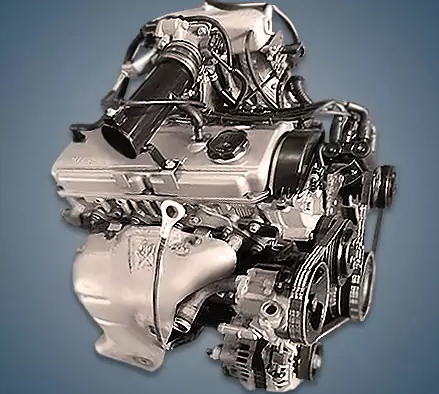
Mitsubishi engine clones: 4G63S4M, 4G63S4T, 4G64S4M, and 4G69S4N.
Specifications
| Production years | since 2009 |
| Displacement, cc | 2378 |
| Fuel system | direct injection |
| Power output, hp | 136 |
| Torque output, Nm | 200 – 205 |
| Cylinder block | cast iron R4 |
| Block head | aluminum 16v |
| Cylinder bore, mm | 87 |
| Piston stroke, mm | 100 |
| Compression ratio | 9.8 |
| Features | SOHC |
| Hydraulic lifters | yes |
| Timing drive | belt |
| Phase regulator | no |
| Turbocharging | no |
| Recommended engine oil | 10W-40 |
| Engine oil capacity, liter | 4.3 |
| Fuel type | petrol |
| Euro standards | EURO 4/5 |
| Fuel consumption, L/100 km (for Great Wall Hover H5 2012) — city — highway — combined |
10.7 8.2 9.4 |
| Engine lifespan, km | ~320 000 |
| Weight, kg | 165 |
The engine was installed on:
- Great Wall Hover H5 in 2010 – 2017;
- Great Wall Hover H6 in 2011 – 2013.
Disadvantages of the Great Wall 4G69S4N engine
Although the motor itself is highly dependable, the components and build quality are subpar;
A known issue in this situation is a cylinder head gasket failure, which occurs frequently;
Keep an eye on the timing belt and balancers’ condition because a break in them could kill the engine;
Additionally, because of throttle and injector contamination, idle speed frequently floats;
The engine’s flaws include hydraulic lifters, a pump, and oil seals that constantly leak.