
The company’s SUVs and pickup trucks, most notably the Hover H5 model, are equipped with the 2.0-liter Great Wall GW4D20 diesel engine, which has been manufactured in Baoding since 2010. This unit has been modified with the index GW4D20B for a transverse arrangement.
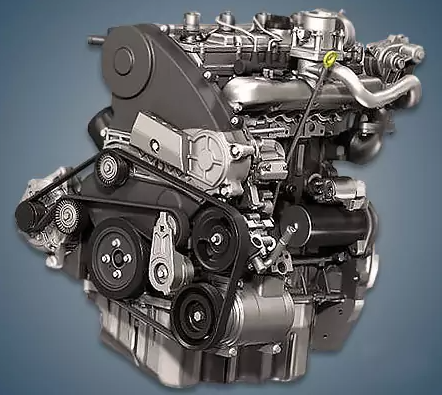
GW4D20, GW4D20B, GW4D20D, GW4D20T, and GW4D20M are your own diesel engines.
The Chinese company Great Wall unveiled a new 2.0-liter turbodiesel in 2010. With a timing belt drive, a BorgWarner BV43 variable geometry turbine, an aluminum 16-valve cylinder head with hydraulic lifters, and a cast-iron cylinder block, this is the most typical Common Rail unit by design. The motors have modifications with Bosch and Xin Feng equipment in addition to a Delphi fuel system.
Specifications
| Production years | since 2010 |
| Displacement, cc | 1996 |
| Fuel system | Common Rail |
| Power output, hp | 140 – 150 |
| Torque output, Nm | 310 |
| Cylinder block | cast iron R4 |
| Block head | aluminum 16v |
| Cylinder bore, mm | 83.1 |
| Piston stroke, mm | 92 |
| Compression ratio | 16.7 |
| Features | DOHC |
| Hydraulic lifters | yes |
| Timing drive | belt |
| Phase regulator | no |
| Turbocharging | BorgWarner BV43 |
| Recommended engine oil | 5W-40, 10W-40 |
| Engine oil capacity, liter | 5.5 |
| Fuel type | diesel |
| Euro standards | EURO 4/5 |
| Fuel consumption, L/100 km (for Great Wall Hover H5 2012) — city — highway — combined |
9.9 7.6 8.4 |
| Engine lifespan, km | ~250 000 |
| Weight, kg | 215 (with attachments) |
The engine was installed on:
- Great Wall Hover H5 in 2010 – 2017;
- Great Wall Wingle 6 in 2014 – 2021.
Disadvantages of the Great Wall GW4D20 engine
The cylinder head gasket failure brought on by overheating is the most well-known issue with this diesel engine. There appears to be a design flaw here, though the precise cause is still unknown.
The majority of this unit’s modifications come with a Delphi fuel system, whose nozzles quickly deteriorate due to any contaminants in diesel fuel. It is strongly advised that the owner replace the filter more frequently and avoid adding anything to the tank.
They frequently complain about oil consumption, lubricant and antifreeze leaks, fuel system airing, and a lack of water pump and turbocharger resources at specialized forums. Additionally, keep an eye on the timing belt’s condition because it breaks easily and bends the valves.