
Since 2008, the Chinese plant has been producing the 1.5-liter Great Wall GW4G15 engine, which powers well-known models like the Hover M2, M4, and comparable Haval H1. In essence, this power unit was a licensed replica of the Toyota 1NZ-FE engine from Japan.
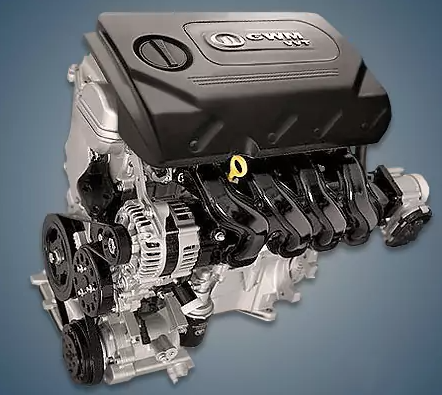
Toyota engine clones: GW4G15, GW4G15B, GW4G15K, and GW491QE.
Specifications
| Production years | since 2008 |
| Displacement, cc | 1497 |
| Fuel system | distributed injection |
| Power output, hp | 95 – 105 |
| Torque output, Nm | 132 – 138 |
| Cylinder block | aluminum R4 |
| Block head | aluminum 16v |
| Cylinder bore, mm | 75 |
| Piston stroke, mm | 84.7 |
| Compression ratio | 10.5 |
| Features | DOHC |
| Hydraulic lifters | no |
| Timing drive | chain |
| Phase regulator | VVTi at the intake |
| Turbocharging | no |
| Recommended engine oil | 5W-30 |
| Engine oil capacity, liter | 3.5 |
| Fuel type | petrol |
| Euro standards | EURO 4 |
| Fuel consumption, L/100 km (for Great Wall Hover M2 2014) — city — highway — combined |
8.8 6.9 7.4 |
| Engine lifespan, km | ~250 000 |
| Weight, kg | 115 |
The engine was installed on:
- Great Wall Coolbear in 2009 – 2015;
- Great Wall Florid in 2008 – 2013;
- Great Wall Hover M2 in 2011 – 2015;
- Great Wall Hover M4 in 2012 – 2016;
- Great Wall Voleex C10 in 2010 – 2014;
- Great Wall Voleex C30 in 2010 – 2016;
- Haval H1 I in 2012 – 2014; H1 II since 2014.
Disadvantages of the Great Wall GW4G15 engine
Oil consumption is the most well-known issue with engines in this family;
The primary cause is either rings or inadequate crankcase ventilation;
Nearer 100,000 kilometers, a phase shifter and timing chain replacement are frequently required;
The engine mounts, turbine valve, and ignition system are the unit’s weak points;
Every 90,000 kilometers, valve clearances must be adjusted by choosing tappets.