
Produced between 1998 and 2016, the Hyundai J3 or 2.9 CRDi 2.9-liter diesel engine was used in commercial vehicles as well as the Terracan SUV and Carnival minivan. This engine was available in two versions: the Common Rail system and the direct fuel injection version.
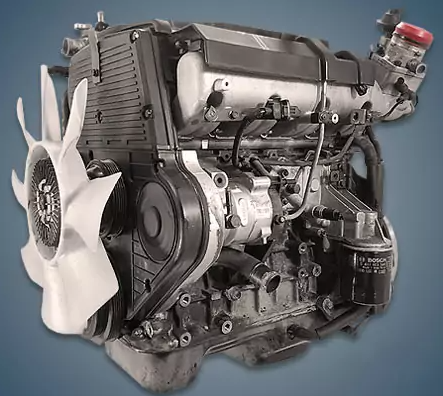
After five years of development, Kia unveiled the 2.9-liter J-series diesel engine in 1999. With a Bosch VE distribution pump, a cast-iron block, an aluminum 16-valve cylinder head with hydraulic lifters, and a timing belt, this engine is a classic for its era. Here, supercharging was handled by the IHI KHF5-1A turbine, a kind of IHI RHF5 turbocharger. The first version supported EURO 2 and produced 126 horsepower and 338 Nm of torque.
The engine started to meet EURO 3 environmental standards in 2001 when it was fitted with a Common Rail Delphi DFP1 system with an injection pressure of 1500 bar. There were two versions of this engine:
- The Carnival minivan has 144 horsepower and 310 Nm with an IHI KHF5-1A turbine and balancer block,
- while the Terracan SUV has 150 horsepower and 333 Nm with an IHI KHF5-2B turbine without balancers.
The Terracan diesel engine was equipped with a Common Rail Delphi DFP3 system in 2004, which increased its power to 163 horsepower and 345 Nm at a pressure of 1600 bar. However, this system only supported EURO 3 environmental standards. However, the BorgWarner BV50 variable geometry turbine, which already produced 185 horsepower and 343 Nm, allowed the second generation Carnival minivan to easily meet EURO 4 environmental standards.
Specifications
| Production years | 1998-2016 |
| Displacement, cc | 2902 |
| Fuel system | direct injection (Bosch VE version) Common Rail (CR Delphi version) |
| Power output, hp | 126 (Bosch VE version) 144 – 185 (CR Delphi version) |
| Torque output, Nm | 338 (Bosch VE version) 310 – 345 (CR Delphi version) |
| Cylinder block | cast iron R4 |
| Block head | aluminum 16v |
| Cylinder bore, mm | 97.1 |
| Piston stroke, mm | 98 |
| Compression ratio | 19.0 (Bosch VE version) 19.3 (CR Delphi version) |
| Hydraulic lifters | yes |
| Timing drive | belt |
| Turbocharging | yes |
| Recommended engine oil | 5W-30, 5W-40 |
| Engine oil capacity, liter | 6.5 |
| Fuel type | diesel |
| Euro standards | EURO 2 (Bosch VE version) EURO 3/4 (CR Delphi version) |
| Fuel consumption, L/100 km (for Hyundai Terracan 2003) — city — highway — combined |
10.5 7.5 8.6 |
| Engine lifespan, km | ~400 000 |
| Weight, kg | 243.9 |
The engine was installed on:
- Hyundai Terracan 1 (HP) in 2001 – 2007;
- Kia Carnival 1 (GQ) in 1999 – 2005; Carnival 2 (VQ) in 2005 – 2009.
Disadvantages of the Hyundai J3 engine
The erratic Common Rail Delphi fuel equipment is the primary cause of the diesel engine’s issues. Numerous instances of the injection pump starting to drive chips and clogging the entire system have been reported on the network. Converting this engine to an old Bosch VE4 pump is therefore a popular service.
Electrical problems are a major source of trouble for owners of vehicles with such a diesel engine. A short circuit in the wiring or an output from the engine ECU is typically the cause.
With mileage, this engine’s oil pump performs noticeably worse, and the drop in lubrication pressure shortens the life of the hydraulic compensators and turbocharger. The fact that the crankshaft liners are hardly ever cranked here is also advantageous.
The mass air flow sensor, the EGR valve, and all quick-release connections are additional weak points of the device that cause frequent air leaks. Additionally, the Kia Carnival frequently loses all of its antifreeze and corrodes its rear stove pipes.