
Overview & Design Features
The IVECO F5HFL413B engine represents a highly advanced and robust powertrain developed by the Italian automotive manufacturer IVECO, renowned for its commercial and industrial vehicles. As a member of the F1C engine family, this 3.0-liter (2998cc) four-cylinder, inline, turbocharged diesel unit is engineered for demanding applications, primarily powering light commercial vehicles, motorhomes, and various industrial equipment. Its design prioritizes durability, fuel efficiency, and compliance with stringent emission standards, making it a cornerstone for applications requiring consistent performance and reliability.
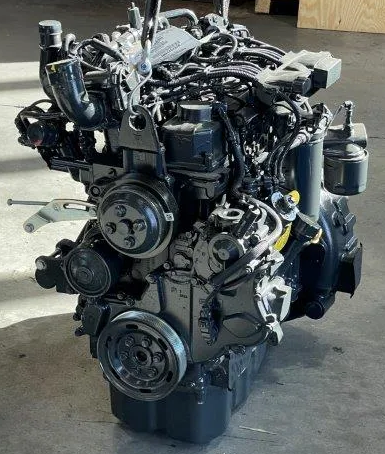
At its core, the F5HFL413B features a durable cast-iron cylinder block and an aluminum alloy cylinder head, optimizing both strength and weight. Fuel delivery is managed by a sophisticated common rail direct injection system operating at high pressures, ensuring precise fuel atomization and efficient combustion. The valvetrain typically incorporates a Dual Overhead Camshaft (DOHC) configuration with 16 valves (four per cylinder), promoting optimal airflow and exhaust scavenging. Forced induction is provided by a variable geometry turbocharger (VGT), which enhances torque delivery across a broad RPM range, complemented by an intercooler to maximize air density. Emission control systems, including an Exhaust Gas Recirculation (EGR) valve, Diesel Particulate Filter (DPF), and Selective Catalytic Reduction (SCR) with AdBlue, are integral to its design, meeting Euro 5 or Euro 6 regulations depending on the specific calibration and production year.
The IVECO F5HFL413B engine has been extensively deployed across various models, most notably within the IVECO Daily range from approximately 2011 onwards, often found in higher-output variants. It powers a diverse array of configurations, including cargo vans, chassis cabs, and passenger minibuses, catering to the needs of logistics, public transport, and specialized service vehicles. Furthermore, its reliability and power output have made it a popular choice for motorhome chassis and specific industrial applications requiring a compact yet powerful diesel engine.
Technical Specifications
| Displacement (cc) | 2998 |
| Max Power (hp (kW) @ RPM) | 170-180 hp (125-132 kW) @ 3500 RPM (varies by tune) |
| Max Torque (Nm (kg*m) @ RPM) | 400-430 Nm (40.8-43.8 kg*m) @ 1500 RPM (varies by tune) |
| Fuel Type | Diesel |
| Fuel Consumption (l/100 km) | Approx. 8.5 – 12.0 (depending on vehicle application and load) |
| Engine Type | Inline 4-cylinder, DOHC, Turbocharged Diesel |
| Compression Ratio | 16.5:1 – 17.0:1 |
| Cylinder Bore (mm) | 95.8 |
| Piston Stroke (mm) | 104.0 |
| Valvetrain | DOHC (Dual Overhead Camshaft) |
| Valves per Cylinder | 4 |
| Additional Info | Common Rail Direct Injection, Variable Geometry Turbocharger (VGT), Intercooler, EGR, DPF, SCR (AdBlue) |
Common Problems & Reliability
The IVECO F5HFL413B engine is generally regarded for its robustness and long service life, a hallmark of commercial diesel engines. However, like all modern diesels, it is susceptible to specific issues, often related to its complex emissions control systems. Common problems include fouling or failure of the EGR (Exhaust Gas Recirculation) valve and cooler, primarily due to carbon buildup from incomplete combustion and short-trip driving cycles. This can lead to reduced performance, increased emissions, and illuminated check engine lights. Another frequent concern is related to the Diesel Particulate Filter (DPF). If the vehicle is not regularly subjected to conditions allowing for active regeneration (sustained highway speeds), the DPF can clog, requiring forced regeneration or costly replacement.
Additionally, issues with the high-pressure fuel injectors are not uncommon at higher mileages, potentially leading to misfires, rough idling, or excessive smoke. Regular maintenance with quality fuel and fuel system cleaners can mitigate this. The variable geometry turbocharger, while efficient, can experience actuator issues or carbon accumulation within its vanes over time, impacting boost pressure and overall engine responsiveness. Under proper maintenance and operational conditions, including adherence to service intervals and avoiding excessive short-distance driving, the IVECO F5HFL413B engine can reliably achieve service lives exceeding 400,000 to 500,000 kilometers before requiring a major overhaul.
Maintenance Tips & Service Schedule
Maintaining the IVECO F5HFL413B engine according to manufacturer specifications is crucial for its longevity and performance. An engineering perspective emphasizes proactive maintenance, particularly regarding fluids and filters. Engine oil changes are recommended every 20,000 to 40,000 kilometers or annually, whichever comes first, utilizing a high-quality synthetic oil with a viscosity typically in the range of 5W-30 or 5W-40, specifically rated ACEA C3 or C4 to protect the DPF. The fuel filter is a critical component for common rail systems and should be replaced every 40,000 to 60,000 kilometers to prevent injector damage from contaminants.
The air filter requires replacement every 40,000 to 60,000 kilometers or more frequently in dusty environments. Coolant flushes and replacements are typically advised every 5 years or 250,000 kilometers, using an OAT (Organic Acid Technology) type coolant. This engine utilizes a robust timing chain system, which generally does not require routine replacement. However, it should be inspected for excessive noise or stretch at major service intervals, typically every 200,000 kilometers. Regular monitoring of the DPF status and ensuring sufficient highway driving for passive regeneration, or initiating forced regeneration as needed, is vital for preventing costly DPF failures. AdBlue (DEF) levels must be maintained for proper SCR system operation and emissions compliance.
Conclusion
The IVECO F5HFL413B engine stands as a testament to robust commercial diesel engineering, offering a compelling blend of power, efficiency, and durability for demanding applications. For a used vehicle buyer, it represents a generally reliable and capable choice, provided that its service history indicates diligent maintenance. Key considerations include verifying consistent oil and filter changes, especially those adhering to DPF-compatible oil specifications, and ensuring the vehicle has been operated in conditions conducive to proper DPF regeneration. While emission control components such as the EGR valve and DPF can be sources of issues in neglected or short-trip vehicles, a well-maintained F5HFL413B engine offers impressive longevity and low operating costs, making it a sound investment for commercial or heavy-duty personal use.