
The most popular models of the third and sixth series were equipped with the 2.0-liter Mazda LF17 engine, which was manufactured at the company’s facility between 2002 and 2013. There is a version of this unit with a different index, LF18, on the first generation Mazda 6.
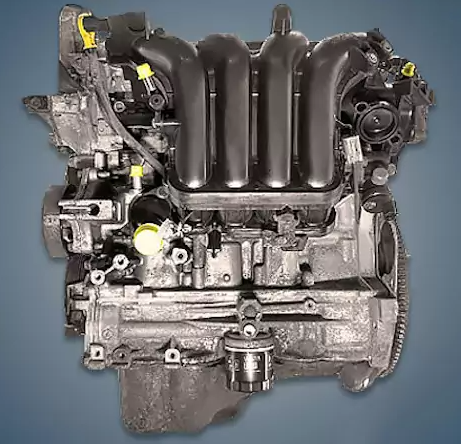
The L-engine family also includes:
- 1.8 L – L8‑DE, L813;
- 2.0 L – LF‑DE, LF‑VD, LF17, LFF7;
- 2.3 L – L3‑VE, L3‑VDT, L3C1;
- 2.5 L – L5‑VE.
The engine was installed on:
- Mazda 3 BK in 2003 – 2008;
- Mazda 3 BL in 2008 – 2013;
- Mazda 6 I (GG) in 2002 – 2007;
- Mazda 6 II (GH) in 2007 – 2012.
Specifications
| Production years | 2002-2013 |
| Displacement, cc | 1999 |
| Fuel system | distributed injection |
| Power output, hp | 140 – 150 |
| Torque output, Nm | 180 – 190 |
| Cylinder block | aluminum R4 |
| Block head | aluminum 16v |
| Cylinder bore, mm | 87.5 |
| Piston stroke, mm | 83.1 |
| Compression ratio | 10.8 |
| Features | DOHC |
| Hydraulic lifters | no |
| Timing drive | chain |
| Phase regulator | no |
| Turbocharging | no |
| Recommended engine oil | 5W-30 |
| Engine oil capacity, liter | 4.3 |
| Fuel type | petrol |
| Euro standards | EURO 4 |
| Fuel consumption, L/100 km (for Mazda 3 2005) — city — highway — combined |
9.7 5.3 6.9 |
| Engine lifespan, km | ~320 000 |
| Weight, kg | 105 |
Disadvantages of the Mazda LF17 engine
The primary cause of floating rpm in early engines was throttle or EGR contamination; intake manifold flaps frequently became stuck or even fell out;
Here, the engine mounts, pump, and thermostat do not have the most resources;
An oil burner and timing chain stretch are frequently observed after 200–250 thousand kilometers;
Since there are no hydraulic lifters, the valves must be adjusted every 100,000 kilometers.