
The GA14 series’ 4-cylinder engines have a very straightforward design: an aluminum head without hydraulic compensators and a cast-iron block. However, this timing chain drive is unique in that it has two chains.
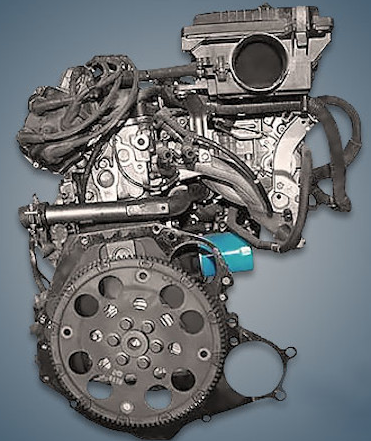
The family includes 3 engines:
- The GA14S has a single 12-valve camshaft and is a basic carburetor. For the time, its 79 horsepower and 111 Nm of torque were respectable.
- GA14DS: an electronically controlled carburetor, catalyst, and 16-valve head with two camshafts. This is 75 horsepower and 112 Nm in total.
- This is a DOHC 16v head and injection injection (GA14DE). With 87 horsepower and 116 Nm of torque, this is the most popular modification.
Internal combustion engine assembly was done at a facility in Yokohama, Japan, from the late 1980s until 2000. After that, it was moved to conveyors in developing nations.
The engine was mounted on:
- Nissan Pulsar N13 in 1986 – 1990;
- Nissan Pulsar N14 in 1990 – 1995;
- Nissan Sunny 3 (B13) in 1990 – 1993;
- Nissan Sentra 2 (B12) in 1985 – 1990;
- Nissan Sentra 3 (B13) in 1990 – 1995;
- Nissan Almera 1 (N15) in 1995 – 2000.
Specifications
| Production years | 1985-2000 |
| Displacement, cc | 1392 |
| Fuel system | carburetor / injector |
| Power output, hp | 75 – 88 |
| Torque output, Nm | 111 – 116 |
| Cylinder block | aluminum R4 |
| Block head | aluminum 12v-16v |
| Cylinder bore, mm | 73.6 |
| Piston stroke, mm | 81.8 |
| Compression ratio | 9.8 – 9.9 |
| Features | no |
| Hydraulic lifters | no |
| Timing drive | chain |
| Phase regulator | no |
| Turbocharging | no |
| Recommended engine oil | 3.2 l 5W-30, 5W-40, 10W-30, 10W-40 |
| Weight, kg | 145 (GA14DE) |
| Fuel type | petrol |
| Euro standards | EURO 1/2 |
| Fuel consumption, L/100 km (for Nissan Almera) — city — highway — combined |
9.2 5.8 7.0 |
| Engine lifespan, km | ~400 000 |
Disadvantages of the GA14DE engine
The cleanliness of various meshes, filters, and jets that clog because of poor gasoline must be continuously checked by owners of carburetor engines.
Both the mass air flow sensor and the idle valve malfunction on versions with electronic injection. Floating idle speed is the primary symptom.
Stuck oil scraper rings, hardened valve caps, or a leaky gasket—which should prevent fuel, lubricants, and crankcase gases from entering the intake tract—are the most common causes of oil burners on extended runs.