
The company produced the 2.0-liter Nissan QR20DD engine in Japan between 2000 and 2005, and it was widely used on the well-liked Bluebird Sylphy sedan. When it comes to fuel quality, the unit is very picky.
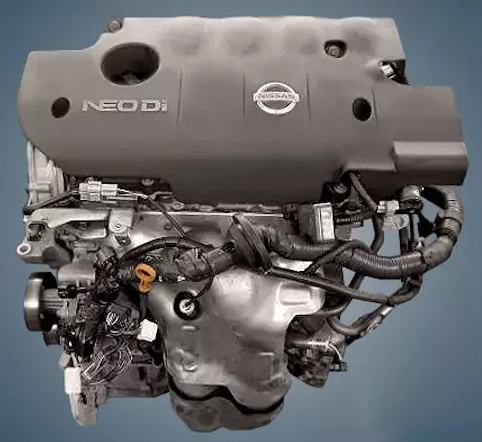
Internal combustion engines QR20DE, QR25DE, QR25DD, and QR25DER are also members of the QR family.
The engine was mounted on:
- Bluebird Sylphy G10 in 2000 – 2005.
Specifications
| Production years | 2000-2005 |
| Displacement, cc | 1998 |
| Fuel system | NEO-Di direct injection |
| Power output, hp | 150 |
| Torque output, Nm | 200 |
| Cylinder block | aluminum R4 |
| Block head | aluminum 16v |
| Cylinder bore, mm | 89 |
| Piston stroke, mm | 80.3 |
| Compression ratio | 11 |
| Features | EGR |
| Hydraulic lifters | no |
| Timing drive | two chains |
| Phase regulator | inlet only |
| Turbocharging | no |
| Recommended engine oil | 5W-30 |
| Engine oil capacity, liter | 3.9 |
| Fuel type | petrol |
| Euro standards | EURO 4 |
| Fuel consumption, L/100 km (for Nissan Bluebird Sylphy 2004) — city — highway — combined |
10.3 6.0 7.9 |
| Engine lifespan, km | ~200 000 |
| Weight, kg | 124 |
Disadvantages of the QR20DD engine
First, we observe that the fuel equipment in this engine is unpredictable;
Soot causes rings to fall, nozzles to clog quickly, and the high-pressure fuel pump to malfunction;
Progressive oil consumption has already started by 100–150 thousand kilometers;
You can’t simply start a car in temperatures below 20 degrees because the motor is freezing;
possess a few minor resources, such as an oil pump, phase regulator, thermostat, and timing chain;
Oil leaks from beneath the engine valve cover are a persistent problem for owners;
Numerous instances of catalyst destruction at low mileage are described in the forums.