
From 2000 to 2012, a Japanese plant assembled the 2.0-liter Nissan QR20DE engine, also known as QR20, which was fitted in several of the company’s mid-size models, including the Primera, Serena, and X-trail.
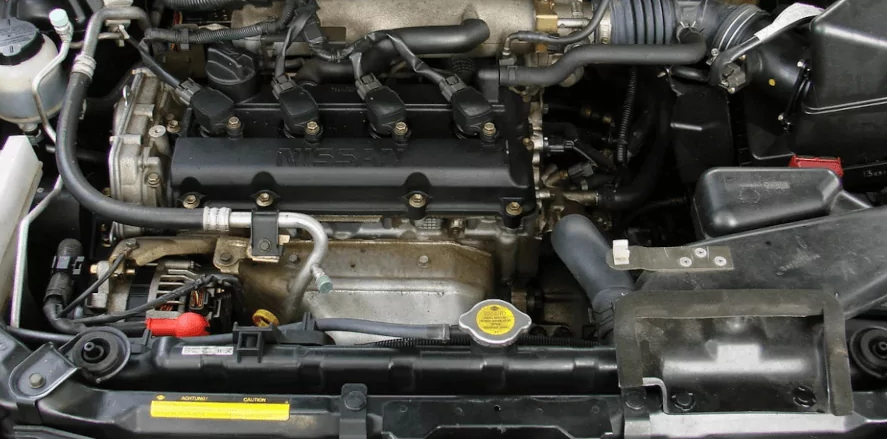
The engine was created to take the place of the well-liked SR20DE. An in-line aluminum cylinder block with an open cooling jacket and cast-iron liners, an aluminum 16-valve cylinder head without hydraulic compensators, an intake phase control system, a timing chain drive, individual ignition coils, and a few balancing shafts comprised the innovative design of the new distributed injection engine at the time.
The QR20DD, QR25DE, QR25DD, and QR25DER internal combustion engines are also members of the QR family.
The engine was installed on:
- Nissan Avenir 2 (W11) in 2002 – 2005;
- Nissan Caravan 5 (E25) in 2007 – 2012;
- Nissan Prairie 3 (M12) in 2001 – 2004;
- Nissan Primera 3 (P12) in 2001 – 2007;
- Nissan Serena 2 (C24) in 2002 – 2012;
- Nissan Teana 1 (J31) in 2003 – 2008;
- Nissan Wingroad 2 (Y11) in 2001 – 2005;
- Nissan X-Trail 1 (T30) in 2000 – 2007.
Specifications
| Manufacturer | Yokohama Plant |
| Production years | 2000-2012 |
| Cylinder block alloy | aluminum |
| Fuel system | distributed injection |
| Configuration | inline |
| Number of cylinders | 4 |
| Valves per cylinder | 4 |
| Piston stroke, mm | 80.3 |
| Cylinder bore, mm | 89 |
| Compression ratio | 9.9 |
| Displacement, cc | 1998 |
| Power output, hp | 147/6000 |
| Torque output, Nm / rpm | 200/4000 |
| Fuel type | petrol |
| Euro standards | Euro 3/4 |
| Weight, kg | 120 |
| Fuel consumption, L/100 km (for Nissan Primera 2005) — city — highway — combined |
11.7 6.7 8.5 |
| Oil consumption, gr/1000 km | up to 500 |
| Recommended engine oil | 0W-30 / 5W-20 / 5W-30 / 5W-40 / 10W-30 / 10W-40 / 10W-60 / 15W-40 / 20W-20 |
| Engine oil capacity, liter | 3.9 |
| Oil change interval, km | 15000 |
| Normal engine operating temperature, °C | ~90 |
| Engine lifespan, km | ~300 000 |
Disadvantages of the QR20DE engine
Up until 2004, excess fuel destroyed the catalyst, causing its crumbs to fall into the combustion chambers, and power units were continuously flooded with candles during cold starts. The control unit was flashed and the catalyst was replaced by a revocable company.
The most well-known engine issue is the oil burner, which can manifest as early as 150,000 kilometers because of critical wear on the oil scraper rings. The ellipse of the cylinders may be the cause; the geometry is not supported by the aluminum block.
A thin leaf Morse chain typically extends to runs of 150–200 thousand kilometers, which manifests as floating idle speeds or unnecessary engine noise. It is frequently necessary to replace the phase regulator in addition to the circuit, which significantly raises the cost.
The cylinder head gasket frequently bursts, and thermostats are not very dependable. It is simple to wait for head deformation and even the emergence of microcracks because the control unit only detects overheating when the engine is truly boiling.
Additionally, the crankshaft position sensor plays a significant role, oil leaks frequently occur from under the valve cover, and revolutions frequently float here due to throttle contamination or gasket failure. Additionally, keep in mind that there are no hydraulic lifters and that the valve clearance must be periodically adjusted.