
The 4-liter VQ40DE engine is now the most voluminous and dependable in the Nissan VQ gasoline unit line. Because of the size of the cylinders and the piston stroke, the volume of this larger version of the VQ35DE was increased. The unit was identical to its predecessor in every other way, including the timing chain drive, two aluminum DOHC heads with a CVTCS phase regulator on the intake, and an aluminum cylinder block. Every 100,000 kilometers, valve clearances must be changed because there are no hydraulic lifters. The power unit was created for SUVs and debuted in the USA in 2005. Up until 2013, it was fitted to the largest Nissan vehicles and the Suzuki Equator. In contrast to modern disposability, it has a beautiful resource, no issues, and a great deal of tuning potential.
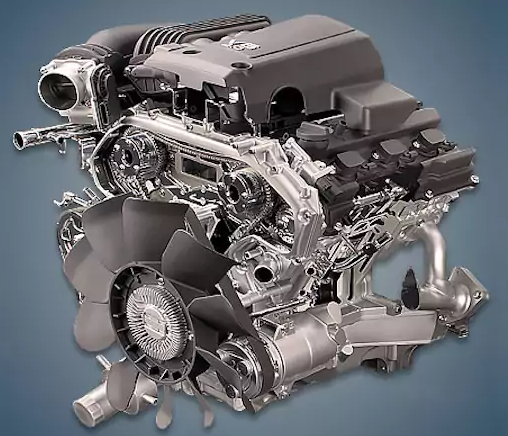
The Pathfinder SUV, as well as the pickup truck and minibus built around it, are equipped with the 4.0-liter V6 Nissan VQ40DE engine, also known as VQ40.
The engine was mounted on:
- Nissan Frontier 2 (D40) in 2004 – 2021;
- Nissan Pathfinder 3 (R51) in 2004 – 2014;
- Nissan Patrol 6 (Y62) in 2017 – …;
- Nissan Xterra 2 (N50) in 2005 – 2015;
- Suzuki Equator 1 (D40) in 2008 – 2012.
Specifications
| Manufacturer | Decherd Powertrain Plant |
| Also called | VQ40 |
| Production years | 2005 |
| Cylinder block alloy | aluminum |
| Fuel system | injector |
| Configuration | V6 |
| Valves per cylinder | 4 |
| Piston stroke, mm | 92 |
| Cylinder bore, mm | 95.5 |
| Compression ratio | 9.7 |
| Displacement, cc | 3954 |
| Power output, hp | 265/5600 269/5600 |
| Torque output, Nm / rpm | 381/4000 390/4000 |
| Fuel type | petrol |
| Euro standards | EURO 3/4 |
| Weight, kg | 190 |
| Fuel consumption, L/100 km (for Pathfinder 2008) — city — highway — combined |
18.7 10.5 13.5 |
| Oil consumption, gr/1000 km | up to 500 |
| Recommended engine oil | 5W-30 / 5W-40 / 10W-30 / 10W-40 |
| Engine oil capacity, liter | 5.1 |
| Oil change interval, km | 15000 |
| Engine lifespan, km | ~500 000 |
Disadvantages of the VQ40DE engine
Owners of Nissans with such units frequently complain about fuel consumption rather than malfunctions, but it still has one flaw. Low-quality fuel destroys the catalyst and pulls its crumbs into the cylinders, resulting in oil burn and scuffing.
This engine overheats frequently due to a poorly designed cooling system. The valve cover gaskets will rapidly harden and oil will seep into the candle wells if you do not keep a close eye on the radiators’ cleanliness and the state of their fans.
Additionally, the cooling fan’s viscous coupling is not very high here, and the valve clearance will need to be adjusted because the motor lacks hydraulic compensators.