
The popular Cefiro and Maxima sedans were the target market for the 2.0-liter Nissan VQ20DE engine, also known as VQ20 for short, which debuted in 1994 as the junior representative of a new line of V6 engines. This power unit’s index was given the NEO prefix following the 1999 modernization.
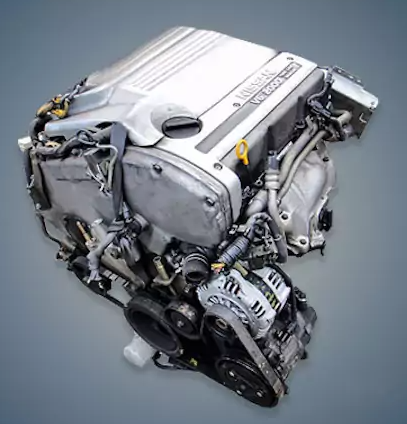
Internal combustion engines VQ23DE, VQ25DE, VQ25DET, VQ25DD, and VQ25HR are also part of the VQ20 series.
The engine was mounted on:
- Nissan Cefiro 2 (A32) in 1994 – 2000;
- Nissan Cefiro 3 (A33) in 1998 – 2004;
- Nissan Maxima 4 (A32) in 1994 – 2000;
- Nissan Maxima 5 (A33) in 1999 – 2006;
- Samsung SM5 1 (A32) in 1998 – 2005.
Specifications
| Start of production | 1994 |
| Displacement, cc | 1995 |
| Fuel system | distributed injection |
| Power output, hp | 140 – 160 |
| Torque output, Nm | 175 – 200 |
| Cylinder block | aluminum V6 |
| Block head | aluminum 24v |
| Cylinder bore, mm | 76 |
| Piston stroke, mm | 73.3 |
| Compression ratio | 9.5 – 10 |
| Features | NDIS |
| Hydraulic lifters | no |
| Timing drive | three chains |
| Phase regulator | no |
| Turbocharging | no |
| Recommended engine oil | 5W-30 |
| Engine oil capacity, liter | 4.0 |
| Fuel type | petrol |
| Euro standards | EURO 3/4 |
| Fuel consumption, L/100 km (for Nissan Cefiro 2003) — city — highway — combined |
12.3 7.3 9.2 |
| Engine lifespan, km | ~300 000 |
| Weight, kg | 175 |
Disadvantages of the VQ20DE engine
Frequently express dissatisfaction over floating speed as a result of idle valve contamination;
The throttle position sensor must be periodically adjusted for even engine operation; the thermal clearances of the valves must also be adjusted because there are no hydraulic compensators.
A timing chain kit will need to be changed after 200–250 thousand kilometers; the engine fears overheating, so keep an eye on the cooling system’s condition;
Oil burn is nearly always a problem for power units with high mileage.