
All of the company’s mid-size models, including the Vectra and Omega, were equipped with the 2.0-liter Opel C20NE or LE4 engine, which was manufactured in Germany between 1986 and 1996. This power unit was given a new X20SE index following its upgrade to EURO 2 environmental standards.
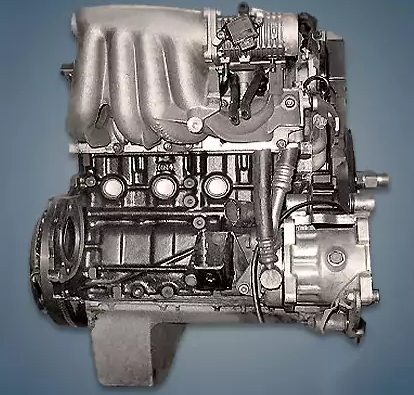
The C20XE, C20LET, C24NE, and C30SE engines are also part of the C20/30 line.
The engine was mounted on:
- Opel Astra F (T92) in 1992 – 1994;
- Opel Ascona C (J82) in 1986 – 1988;
- Opel Calibra A (C89) in 1989 – 1996;
- Opel Frontera A (U92) in 1991 – 1995;
- Opel Kadett E (T85) in 1986 – 1993;
- Opel Omega A (V87) in 1986 – 1993;
- Opel Vectra A (J89) in 1988 – 1995.
Specifications
| Production years | 1986-1996 |
| Displacement, cc | 1998 |
| Fuel system | distributed injection |
| Power output, hp | 115 |
| Torque output, Nm | 170 |
| Cylinder block | cast iron R4 |
| Block head | aluminum 8v |
| Cylinder bore, mm | 86 |
| Piston stroke, mm | 86 |
| Compression ratio | 9.2 |
| Features | no |
| Hydraulic lifters | yes |
| Timing drive | belt |
| Phase regulator | no |
| Turbocharging | no |
| Recommended engine oil | 5W-30 |
| Engine oil capacity, liter | 4.5 |
| Fuel type | petrol |
| Euro standards | EURO 1 |
| Fuel consumption, L/100 km (for Opel Omega 1992) — city — highway — combined |
11.9 6.3 8.1 |
| Engine lifespan, km | ~350 000 |
| Weight, kg | 120 |
Disadvantages of the C20NE engine
The motor is dependable, has no flaws, and all of its issues are related to normal wear and tear;
Drivers typically lament the ignition system’s unpredictability, particularly with regard to the distributor;
The malfunctions of different electronic sensors rank second in terms of popularity.
The timing belt travels between 50 and 60 thousand kilometers, but if it breaks, the valves won’t bend; hydraulic lifters can travel up to 100 thousand kilometers because low-quality oils are used.