
The company’s most well-liked mid-size models, including the Astra and Vectra, were equipped with the 1.6-liter Opel X16XEL engine, which was manufactured at a plant in Hungary between 1994 and 2000. This power unit had a slightly more potent variant with a different X16XE index.
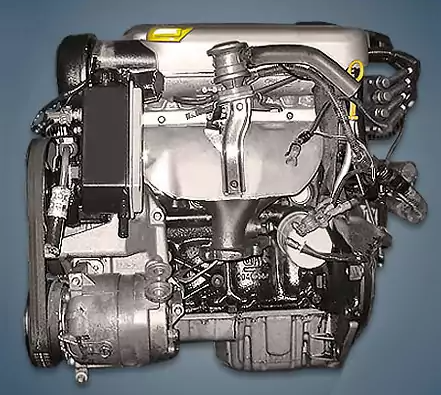
X12XE, X14XE, X16XEL, X16SZR, X18XE, and X18XE1 are all part of the X10 line.
The engine was mounted on:
- Opel Astra F (T92) in 1994 – 1998; Astra G (T98) in 1998 – 2000;
- Opel Vectra B (J96) in 1995 – 2000;
- Opel Zafira A (T98) in 1999 – 2000.
Specifications
| Production years | 1994-2000 |
| Displacement, cc | 1598 |
| Fuel system | distributed injection |
| Power output, hp | 100 |
| Torque output, Nm | 150 |
| Cylinder block | cast iron R4 |
| Block head | aluminum 16v |
| Cylinder bore, mm | 79 |
| Piston stroke, mm | 81.5 |
| Compression ratio | 10.5 |
| Features | no |
| Hydraulic lifters | yes |
| Timing drive | belt |
| Phase regulator | no |
| Turbocharging | no |
| Recommended engine oil | 5W-30 |
| Engine oil capacity, liter | 3.5 |
| Fuel type | petrol |
| Euro standards | EURO 2 |
| Fuel consumption, L/100 km (for Opel Vectra 1999) — city — highway — combined |
10.2 5.9 7.5 |
| Engine lifespan, km | ~275 000 |
| Weight, kg | 130 |
Disadvantages of the X16XEL engine
Valve stem seals flying off the valve guides is the primary issue;
When oil consumption starts, the service station offers pointless decarbonization;
Keep an eye on the timing belt’s condition; it has a 60,000 km lifespan and bends the valves when it breaks;
Contamination of the EGR valve is the reason for engine thrust dips or floating speed;
Drying gaskets beneath the nozzles are a common source of malfunctions.