
From 2002 to 2012, the company’s factories produced the Saab B207R 2.0-liter turbo engine, which was mounted on sophisticated versions of the well-liked second-generation 9-3 Aero model. This power unit is comparable to the Opel Z20NET and is one of the GM LK9 engine variants.
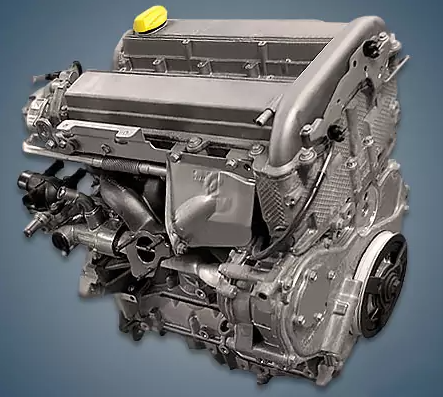
B207E, B207L, and B207R are the R4 GM engines.
Specifications
| Production years | 2002-2012 |
| Displacement, cc | 1998 |
| Fuel system | distributed injection |
| Power output, hp | 210 |
| Torque output, Nm | 300 |
| Cylinder block | aluminum R4 |
| Block head | aluminum 16v |
| Cylinder bore, mm | 86 |
| Piston stroke, mm | 86 |
| Compression ratio | 9.5 |
| Features | intercooler |
| Hydraulic lifters | yes |
| Timing drive | chain |
| Phase regulator | no |
| Turbocharging | MHI TD04-11TK |
| Recommended engine oil | 5W-30 |
| Engine oil capacity, liter | 5.7 |
| Fuel type | petrol |
| Euro standards | EURO 4/5 |
| Fuel consumption, L/100 km (for Saab 9-3 Aero 2011) — city — highway — combined |
12.0 7.1 8.9 |
| Engine lifespan, km | ~270 000 |
The engine was installed on:
- Saab 9-3 II (YS3F) in 2002 – 2012.
Disadvantages of the Saab B207R engine
Although this engine is entirely dependable, the chain resource is quite small;
The timing chain and balancer shafts are frequently extended even prior to 200,000 kilometers of run;
The bypass valve frequently fails, but the turbocharger functions well;
This motor’s short-lived crankcase ventilation system valve is the source of a lot of problems;
The control unit, fuel pump, electric throttle, and crankshaft position sensor are among its weaknesses.