
The 1.9-liter diesel Saab D207L, also known as the 1.9 TiD, was manufactured between 2004 and 2010 and was fitted to a few of the Swedish company’s most well-liked models with indexes 9-3 and 9-5. Fiat developed this 16-valve engine, which is comparable to the Opel Z19DTH power unit.
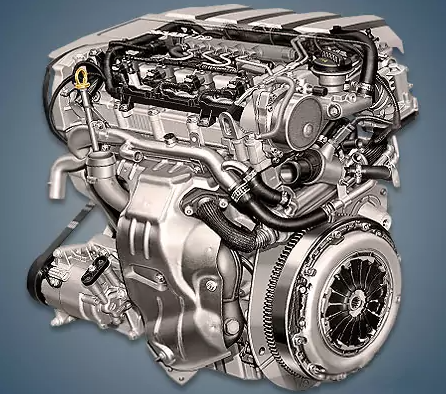
D207E, D207L, D207R, D223L, and D308L are Saab diesel engines.
Specifications
| Production years | 2004-2010 |
| Displacement, cc | 1910 |
| Fuel system | Common Rail |
| Power output, hp | 150 |
| Torque output, Nm | 320 |
| Cylinder block | cast iron R4 |
| Block head | aluminum 16v |
| Cylinder bore, mm | 82 |
| Piston stroke, mm | 90.4 |
| Compression ratio | 17.5 |
| Features | DOHC |
| Hydraulic lifters | yes |
| Timing drive | belt |
| Phase regulator | no |
| Turbocharging | Garrett GT1749MV |
| Recommended engine oil | 5W-40 |
| Engine oil capacity, liter | 4.6 |
| Fuel type | diesel |
| Euro standards | EURO 4 |
| Fuel consumption, L/100 km (for Saab 9-5 2007) — city — highway — combined |
8.6 5.2 6.4 |
| Engine lifespan, km | ~300 000 |
| Weight, kg | 185 |
The engine was installed on:
- Saab 9-3 II (YS3F) in 2004 – 2010;
- Saab 9-5 I (YS3E) in 2005 – 2010.
Disadvantages of the Saab D207L engine
Swirl flaps in the intake manifold are the primary cause of engine issues.
Wearing them causes them to wedge, randomly close, and sometimes even fall off.
The only part of the fuel system that frequently causes problems is the metering valve.
Nozzles frequently begin to pour at high mileage, but they are excellent for repairs.
In the vicinity of the fourth cylinder, the exhaust manifold may occasionally crack or distort.