
From 1990 to 1999, the company produced the 2.3-liter naturally aspirated Saab B234i engine, which was fitted to the company’s most well-liked models at the time, including the 9000, 900, and 9-3. The motor came in two versions: the 1990 Long Block and the 1993 Short Block.
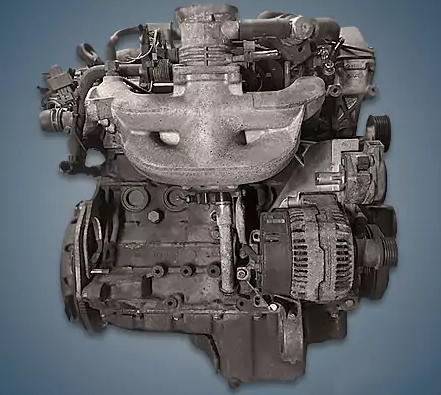
B234E, B234i, B234R, B235E, and B235R are 2.3-liter H-series engines.
Specifications
| Production years | 1990-1999 |
| Displacement, cc | 2290 |
| Fuel system | distributed injection |
| Power output, hp | 150 |
| Torque output, Nm | 210 |
| Cylinder block | cast iron R4 |
| Block head | aluminum 16v |
| Cylinder bore, mm | 90 |
| Piston stroke, mm | 90 |
| Compression ratio | 10.0 – 10.5 |
| Features | Bosch Motronic |
| Hydraulic lifters | yes |
| Timing drive | chain |
| Phase regulator | no |
| Turbocharging | no |
| Recommended engine oil | 5W-40 |
| Engine oil capacity, liter | 4.0 |
| Fuel type | petrol |
| Euro standards | EURO 2/3 |
| Fuel consumption, L/100 km (for Saab 9000 1995) — city — highway — combined |
11.1 7.3 9.2 |
| Engine lifespan, km | ~360 000 |
The engine was installed on:
- Saab 900 II (NG) in 1993 – 1998;
- Saab 9000 I in 1990 – 1995;
- Saab 9-3 I (YS3D) in 1998 – 1999.
Disadvantages of the Saab B234i engine
This family’s power units are all incredibly dependable and particularly atmospheric.
Balance shafts are the primary cause of most issues, and many people just remove them.
The engine’s timing chain frequently stretches and begins to rattle loudly after 250,000 kilometers.
Leaks from collapsed pipes and hoses are a major source of problems here.
The oil pump, short-lived wiring, and mass air flow sensor are additional engine weaknesses.