
Subaru introduced the 2.5-liter EJ25 engine in 1994. This engine block, which was 201 mm tall and composed of aluminum alloy, was the same as the EJ20 engine block. The 2.5-liter engine had a cylinder diameter of 99.5 mm as opposed to the 2.0-liter engine’s 92 mm.
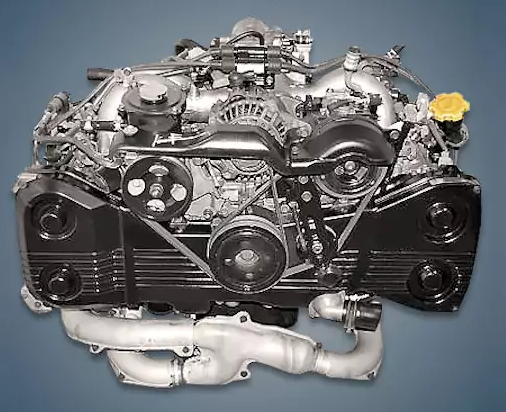
From 1994 to 1999, the company manufactured the EJ25D, which was installed on nearly all of the company’s mass models in the mid-1990s. A whole range of units, including those with turbocharging, were built using this motor as their foundation.
Produced between 1998 and 2004, the EJ251 was installed on nearly all of the company’s models at the time, including the Impreza, Legacy, and Forester. A version with the EJ252 index was available for markets with stringent environmental regulations.
The Impreza, Legacy, Forester, and other models were equipped with the EJ253, which was manufactured between 1999 and 2012. The motor was different from its predecessors in that it had an i-AVLS phase regulator and a mass air flow sensor rather than an absolute pressure sensor.
The EJ254, which was manufactured between 1998 and 2007, was installed on the Forester and Outback in addition to the third generation Legacy. This unit was among the first to have the exclusive AVCS phase control system installed.
Since 2004, the EJ255 has been manufactured and installed on charged versions of well-known models like the Impreza, Legacy, and Forester. With power ranging from 210 to 265 horsepower, this power unit has numerous modifications.
Produced since 2004, the EJ257 is best known for its sports modifications of the Impreza model with the WRX STI index. Charged versions of the Forester and Legacy were equipped with this motor in a less forced configuration.
Specifications
| Start of production | 1994 |
| Displacement, cc | 2457 |
| Fuel system | injector |
| Power output, hp | 155 – 165 (EJ25D) 165 (EJ251) 165 (EJ253 without phase control system) 175 (EJ253 with phase control system) 165 – 170 (EJ254) 210 – 265 (EJ255) 210 – 250 (EJ257 basic) 280 – 310 (EJ257 STI) |
| Torque output, Nm | 190 – 220 (EJ25D) 225 (EJ251) 225 (EJ253 without phase control system) 225 – 230 (EJ253 with phase control system) 240 – 245 (EJ254) 320 – 350 (EJ255) 320 – 350 (EJ257 basic) 390 – 410 (EJ257 STI) |
| Cylinder block | aluminum H4 |
| Block head | aluminum 16v |
| Cylinder bore, mm | 99.5 |
| Piston stroke, mm | 79 |
| Compression ratio | 9.5 (EJ25D) 10 (EJ251, EJ253) 10.2 – 10.7 (EJ254) 8.2 – 8.4 (EJ255) 8.4 (EJ257 basic) 8.0 – 8.2 (EJ257 STI) |
| Features | DOHC (EJ25D, EJ254, EJ255, EJ257) SOHC (EJ251, EJ253) |
| Hydraulic lifters | no |
| Timing drive | belt |
| Phase regulator | no (EJ25D, EJ251, EJ253 without phase control system) i-AVLS (EJ253 with phase control system) AVCS (EJ254, EJ255, EJ257) |
| Turbocharging | no (EJ25D, EJ251, EJ253, EJ254) yes (EJ255, EJ257) |
| Recommended engine oil | 5W-30 |
| Engine oil capacity, liter | 4.0 (EJ25D) 4.2 (EJ251, EJ253, EJ255, EJ257 basic) 4.6 (EJ254) 4.3 (EJ257 STI) |
| Fuel type | petrol |
| Euro standards | EURO 1/2 (EJ25D) EURO 2/3 (EJ251, EJ253 without phase control system) EURO 3/4 (EJ253 with phase control system, EJ254, EJ255, EJ257) |
| Fuel consumption, L/100 km (EJ25D for Subaru Legacy 1997) — city — highway — combined |
14.0 7.8 9.9 |
| Engine lifespan, km | ~300 000 |
| Weight, kg | 130 (EJ25D, EJ251) 135 (EJ253, EJ254) 170 (EJ255) 175 (EJ257) |
Disadvantages of the EJ25 engine
Oil consumption is the primary grievance of automobile owners with such an engine;
Additionally, the oil leaks from gaskets and seals in addition to being used for waste; if the lubrication level is too low, the liners may turn;
The cooling system is not renowned for its effectiveness, and this motor is quite hot;
The fourth cylinder’s knocks will indicate whether the block was overheated.