
Since 2006, multiple factories have simultaneously produced the 1.6-liter Toyota 1ZR-FE engine, which is best known for the Corolla and Auris, two of the Japanese company’s most popular models. This unit is available under its own index, 4ZR-FE, for the Chinese market.
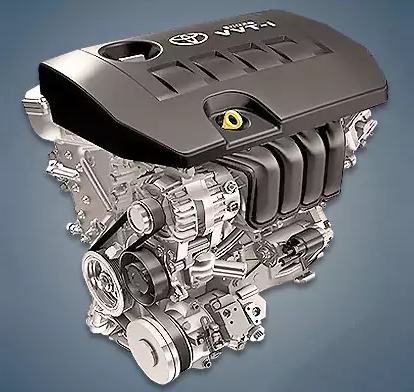
In 2006, this motor made its debut on the Corolla and Auris, two European bestsellers. Its design, which included an aluminum 16-valve cylinder head with two camshafts and hydraulic compensators, a timing chain drive, a Dual VVT-i phase control system on the intake and exhaust shafts, and a cast aluminum cylinder block with cast-iron liners and an open cooling jacket, was a quintessential example of the Japanese engine industry at the time.
This is where fuel injection is distributed, and an ACIS-style system in the intake manifold modifies the intake tract’s length based on the power unit’s operating mode. This unit fits into EURO 5 with ease because of the ETCS-i electronic throttle.
The engines in the ZR family are 1ZR-FE, 1ZR-FAE, 2ZR-FE, 2ZR-FAE, 2ZR-FXE, 3ZR-FE, and 3ZR-FAE.
The engine was mounted on:
- Toyota Auris 1 (E150) in 2006 – 2012; Auris 2 (E180) in 2012 – 2013;
- Toyota Corolla 10 (E150) in 2006 – 2013; Corolla 11 (E180) in 2013 – 2019; Corolla 12 (E210) since 2019;
- Toyota Vios 2 (XP90) in 2007 – 2013.
Specifications
| Production years | since 2006 |
| Displacement, cc | 1598 |
| Fuel system | injector |
| Power output, hp | 120 – 125 |
| Torque output, Nm | 150 – 160 |
| Cylinder block | aluminum R4 |
| Block head | aluminum 16v |
| Cylinder bore, mm | 80.5 |
| Piston stroke, mm | 78.5 |
| Compression ratio | 10.2 |
| Hydraulic lifters | yes |
| Timing drive | chain |
| Phase regulator | Dual VVT-i |
| Turbocharging | no |
| Recommended engine oil | 5W-20, 5W-30 |
| Engine oil capacity, liter | 4.2 |
| Fuel type | petrol |
| Euro standards | EURO 4/5 |
| Fuel consumption, L/100 km (for Toyota Corolla 2012) — city — highway — combined |
8.9 5.8 6.9 |
| Engine lifespan, km | ~300 000 |
| Weight, kg | 120 |
Disadvantages of the 1ZR-FE engine
Although the motor is thought to be the most dependable in the series due to the absence of the erratic Valvematic system, oil consumption and increased carbon formation in the combustion chambers were frequent during the engine’s early production years. However, things returned to normal after that.
Many owners need to replace the timing chain on runs between 150 and 200 thousand kilometers. Since the phase regulators’ resources are similar, we advise checking them concurrently.
The water pump can travel up to 50,000 kilometers with a very limited resource. Oil frequently seeps around the timing chain tensioner, but changing the gasket can help.
Leaks from beneath the valve cover, persistently sweating injector o-rings, a recurring wedge of VVT-i valves, and floating idle speeds as a result of electronic throttle contamination are some of this power unit’s minor issues.