
From 1984 until 1997, the 2.0-liter Toyota 3Y-E injection engine was manufactured in Japan and fitted to Hilux SUVs and pickup trucks, as well as the Mark II Van X70 station wagon. Such a power unit had a gas modification with its own index, 3Y-PE.
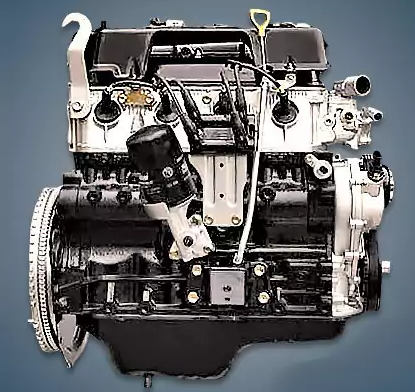
The engines in the Y family are 1Y, 2Y, 3Y, 3Y-E, 3Y-EU, 4Y, and 4Y-E.
The engine was mounted on:
- Toyota Hilux 4 (N50) in 1984 – 1988;
- Toyota Hilux Surf N60 in 1984 – 1989;
- Toyota Mark II 5 (X70) in 1984 – 1988;
- Toyota Mark II Van X70 in 1984 – 1997.
Specifications
| Production years | 1984-1997 |
| Displacement, cc | 1998 |
| Fuel system | injector |
| Power output, hp | 97 |
| Torque output, Nm | 160 |
| Cylinder block | cast iron R4 |
| Block head | aluminum 8v |
| Cylinder bore, mm | 86 |
| Piston stroke, mm | 86 |
| Compression ratio | 8.8 |
| Features | OHV |
| Hydraulic lifters | yes |
| Timing drive | chain |
| Phase regulator | no |
| Turbocharging | no |
| Recommended engine oil | 5W-30 |
| Engine oil capacity, liter | 3.5 |
| Fuel type | petrol |
| Euro standards | EURO 2 |
| Fuel consumption, L/100 km (for Toyota Hilux 1987) — city — highway — combined |
10.4 7.8 8.6 |
| Engine lifespan, km | ~340 000 |
| Weight, kg | 150 |
Disadvantages of the Toyota 3Y-E engine
This engine’s propensity to overheat is the main cause of its issues.
First of all, gasket failure and cylinder head warping are brought on by high temperatures.
In severe circumstances, this may lead to the fourth cylinder’s wall being destroyed.
Here, lubricant consumption occurs and valve stem seals are tanned for the same reason.
The engine’s gasoline pump and erratic ignition system are also weak points.