
From 1996 to 2000, the company produced the 1.8-liter Volkswagen AGN 20v engine, which was fitted to the popular Golf model’s fourth generation as well as its Audi or Seat counterparts. An updated motor with the APG index replaced this power unit in 2000.
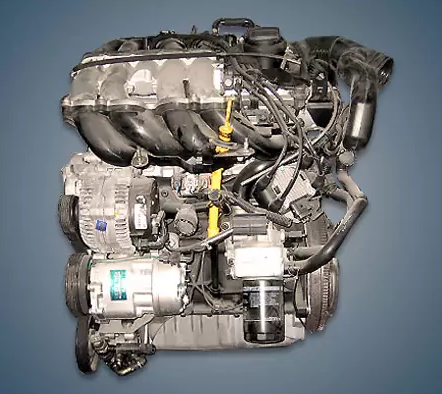
AGN and APG are part of the EA113-1.8 series.
Specifications
| Production years | 1996-2000 |
| Displacement, cc | 1781 |
| Fuel system | injector |
| Power output, hp | 125 |
| Torque output, Nm | 170 |
| Cylinder block | cast iron R4 |
| Block head | aluminum 20v |
| Cylinder bore, mm | 81 |
| Piston stroke, mm | 86.4 |
| Compression ratio | 10.3 |
| Features | DOHC |
| Hydraulic lifters | yes |
| Timing drive | chain & belt |
| Phase regulator | no |
| Turbocharging | no |
| Recommended engine oil | 5W-30 |
| Engine oil capacity, liter | 4.5 |
| Fuel type | petrol |
| Euro standards | EURO 2 |
| Fuel consumption, L/100 km (for VW Golf 4 1999) — city — highway — combined |
11.7 6.3 8.3 |
| Engine lifespan, km | ~330 000 |
The engine was installed on:
- Audi A3 1 (8L) in 1996 – 2000;
- Seat Leon 1 (1M) in 1999 – 2000;
- Seat Toledo 2 (1M) in 1998 – 2000;
- Skoda Octavia 1 (1U) in 1996 – 1999;
- Volkswagen Bora 1 (1J) in 1999 – 2000;
- Volkswagen Golf 4 (1J) in 1997 – 2000.
Disadvantages of the VW AGN engine
Owners are rarely concerned about this engine, which is well-known for its dependability.
Frequently, only the intake manifold flaps’ vacuum regulator malfunctions.
Floating engine speed is a result of dirty throttles or injectors.
The quarry’s unpredictable ventilation system causes many issues for the owners.
Here, a rather basic resource includes a mass air flow sensor, a coolant temperature sensor, and a lambda probe.