
The third-generation sports modifications of the Golf and the fourth Passat were equipped with the Volkswagen 2.0 ABF 16v 2.0-liter gasoline engine, which was manufactured between 1992 and 1999. Additionally, Seat Ibiza, Toledo, and Cordoba vehicles have this power unit under the hood.
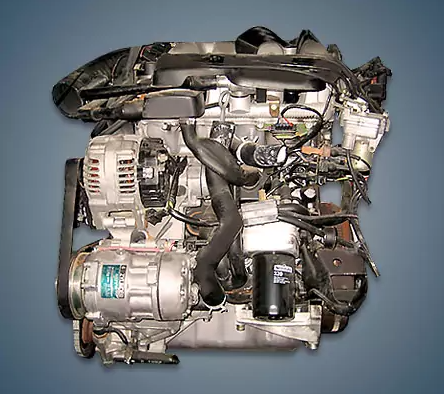
The models in the EA827 2.0l series are 2E, AAD, AAE, ABT, ABK, ADY, AGG, ABF, and ACE.
Specifications
| Production years | 1992-1999 |
| Displacement, cc | 1984 |
| Fuel system | injector |
| Power output, hp | 150 |
| Torque output, Nm | 180 |
| Cylinder block | cast iron R4 |
| Block head | aluminum 16v |
| Cylinder bore, mm | 82.5 |
| Piston stroke, mm | 92.8 |
| Compression ratio | 10.5 |
| Features | DOHC |
| Hydraulic lifters | yes |
| Timing drive | chain & belt |
| Phase regulator | no |
| Turbocharging | no |
| Recommended engine oil | 5W-30 |
| Engine oil capacity, liter | 4.3 |
| Fuel type | petrol |
| Euro standards | EURO 2/3 |
| Fuel consumption, L/100 km (for VW Golf 3 GTI 1995) — city — highway — combined |
11.6 6.7 8.5 |
| Engine lifespan, km | ~400 000 |
The engine was installed on:
- Volkswagen Golf 3 (1H) in 1992 – 1997;
- Volkswagen Passat B4 (3A) in 1993 – 1996;
- Seat Cordoba 1 (6K) in 1996 – 1999;
- Seat Ibiza 2 (6K) in 1996 – 1999;
- Seat Toledo 1 (1L) in 1996 – 1999.
Disadvantages of the VW ABF engine
This power unit is thought to be very dependable and rarely malfunctions.
However, the motor’s design makes extensive use of pricey, unique components.
Sensor failures, particularly the throttle position sensor, are the primary cause of these issues.
The valves typically bend when the timing belt resource, which is approximately 90,000 kilometers, breaks.
Piston rings frequently lie and oil consumption manifests at high mileage.