
Volkswagen’s most popular models, including the third Golf and Passat B4, were equipped with the 2.0-liter gasoline engine Volkswagen 2.0 AGG 8v, which was manufactured between 1995 and 1999. Cars made under the Seat brand frequently have another one of these power units under the hood.
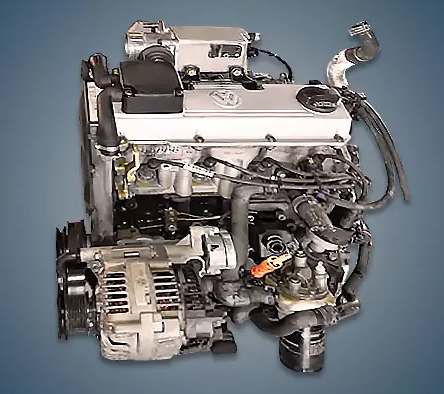
The models in the EA827 2.0l series are 2E, AAD, AAE, ABT, ABK, ADY, AGG, ABF, and ACE.
Specifications
| Production years | 1995-1999 |
| Displacement, cc | 1984 |
| Fuel system | injector |
| Power output, hp | 115 |
| Torque output, Nm | 166 |
| Cylinder block | cast iron R4 |
| Block head | aluminum 8v |
| Cylinder bore, mm | 82.5 |
| Piston stroke, mm | 92.8 |
| Compression ratio | 9.6 |
| Features | SOHC |
| Hydraulic lifters | yes |
| Timing drive | belt |
| Phase regulator | no |
| Turbocharging | no |
| Recommended engine oil | 5W-30 |
| Engine oil capacity, liter | 3.8 |
| Fuel type | petrol |
| Euro standards | EURO 2/3 |
| Fuel consumption, L/100 km (for VW Passat 1995) — city — highway — combined |
11.9 6.8 8.7 |
| Engine lifespan, km | ~430 000 |
The engine was installed on:
- Volkswagen Golf 3 (1H) in 1995 – 1999;
- Volkswagen Passat B4 (3A) in 1995 – 1996;
- Volkswagen Vento 1 (1H) in 1995 – 1998;
- Seat Cordoba 1 (6K) in 1996 – 1999;
- Seat Ibiza 2 (6K) in 1996 – 1999;
- Seat Toledo 1 (1L) in 1996 – 1999.
Disadvantages of the VW AGG engine
The majority of engine issues are brought on by malfunctioning ignition system components; a worthy successor to the 2E motor is likewise dependable and seldom worries its owners;
The crankshaft position sensor, coolant temperature sensor, idle speed controller, and electrician are typically the cause of the remaining malfunctions;
The timing belt lasts roughly 90,000 kilometers, but when it breaks, the valves hardly ever bend; closer to 250,000 kilometers, rings frequently lie down and oil consumption starts to show.