
From 2000 to 2010, the company produced the Volkswagen AWC 1.8-liter turbo engine, which was fitted to the redesigned first-generation Sharan and the comparable Alhambra. A proprietary controlled hydraulic tensioner-phase regulator sets this motor apart.
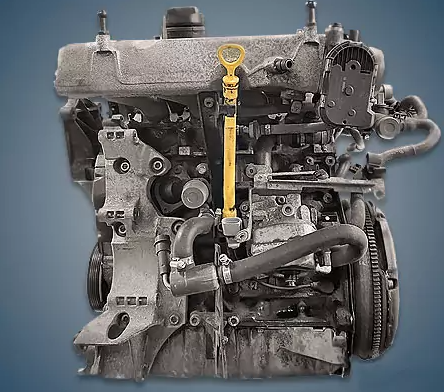
AGU, AWT, AMB, AWM, AUQ, and AWC are all part of the EA113-1.8T series.
Specifications
| Production years | 2000-2010 |
| Displacement, cc | 1781 |
| Fuel system | distributed injection |
| Power output, hp | 150 |
| Torque output, Nm | 220 |
| Cylinder block | cast iron R4 |
| Block head | aluminum 20v |
| Cylinder bore, mm | 81 |
| Piston stroke, mm | 86.4 |
| Compression ratio | 9.5 |
| Features | DOHC |
| Hydraulic lifters | yes |
| Timing drive | chain & belt |
| Phase regulator | controlled tensioner |
| Turbocharging | KKK K03 |
| Recommended engine oil | 5W-30 |
| Engine oil capacity, liter | 4.0 |
| Fuel type | petrol |
| Euro standards | EURO 4 |
| Fuel consumption, L/100 km (for VW Sharan 2001) — city — highway — combined |
13.0 7.4 9.7 |
| Engine lifespan, km | ~300 000 |
| Weight, kg | 150 |
The engine was installed on:
- Seat Alhambra 1 (7M) in 2000 – 2010;
- Volkswagen Sharan 1 (7M) in 2000 – 2010.
Disadvantages of the VW AWC engine
Although this engine is powerful and incredibly clever, it frequently has air leaks.
Numerous nozzles make up its intake system, and the cause can be investigated for a considerable amount of time.
Additionally, this dual-circuit crankcase ventilation system is complicated and unreliable.
Only when the crankcase ventilation system is operational can the turbine operate for an extended period of time without experiencing any issues.
Antifreeze leaks frequently occur through the cooling system’s plastic tee.
In addition to being a phase regulator, the branded hydraulic tensioner does not have any unique features.
The fuel pump, coolant temperature sensor, and ignition coils are weak points.