
The second-generation S80 sedan and XC90 crossover with automatic transmission were equipped with the Volvo B8444S 4.4-liter V8 engine, which was manufactured at the plant in Japan between 2005 and 2010. Yamaha Motor Corporation, a Japanese company, created and manufactured such a power unit.
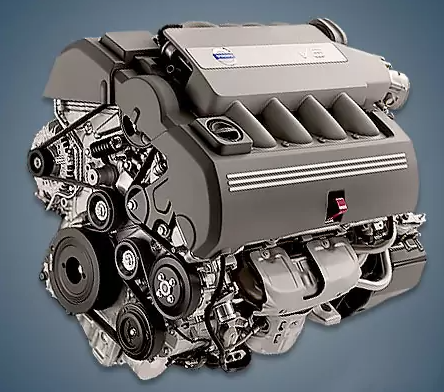
The engine was installed on:
- Volvo S80 II (124) in 2006 – 2010;
- Volvo XC90 I (275) in 2005 – 2010.
Specifications
| Production years | 2005-2010 |
| Displacement, cc | 4414 |
| Fuel system | injector |
| Power output, hp | 315 |
| Torque output, Nm | 440 |
| Cylinder block | aluminum V8 |
| Block head | aluminum 32v |
| Cylinder bore, mm | 94 |
| Piston stroke, mm | 79.5 |
| Compression ratio | 10.4 |
| Features | DOHC |
| Hydraulic lifters | no |
| Timing drive | chain |
| Phase regulator | Dual VVTi |
| Turbocharging | no |
| Recommended engine oil | 5W-30 |
| Engine oil capacity, liter | 6.7 |
| Fuel type | petrol |
| Euro standards | EURO 4 |
| Fuel consumption, L/100 km (for Volvo XC90 2008) — city — highway — combined |
19.9 9.8 13.5 |
| Engine lifespan, km | ~500 000 |
| Weight, kg | 210 |
Disadvantages of the B8444S engine
Fuel consumption is the primary drawback of this highly dependable power unit.
The wear of the balance shaft bearing is the most costly motor issue.
The chain will typically jump and the valves will bend when riding with a humming bearing.
Additionally, the engine is big and heavy, which shortens the subframe’s and supports’ lifespan.
Overheating causes gaskets to quickly tan, and leaks can be seen beneath the valve covers.