
Produced between 2013 and 2015, the Audi CTSA 2.5-liter turbo engine, also known as the RS Q3 2.5 TFSI, was limited to the RS, a charged version of the Q3 model in the 8U body. CZGA and CZGB indices are available for updated versions of this engine with 340 and 367 horsepower capacities.
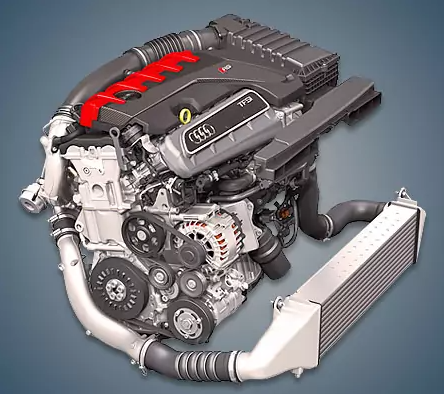
The EA855 series includes: BGP, CBTA, CEPA, CTSA, DAZA, DNWA.
Specifications
| Production years | 2013-2015 |
| Displacement, cc | 2480 |
| Fuel system | direct injection |
| Power output, hp | 310 |
| Torque output, Nm | 420 |
| Cylinder block | cast iron R5 |
| Block head | aluminum 20v |
| Cylinder bore, mm | 82.5 |
| Piston stroke, mm | 92.8 |
| Compression ratio | 10.0 |
| Features | intercooler |
| Hydraulic lifters | yes |
| Timing drive | chain |
| Phase regulator | on both shafts |
| Turbocharging | BorgWarner K16 |
| Recommended engine oil | 5W-30 |
| Engine oil capacity, liter | 6.5 |
| Fuel type | petrol |
| Euro standards | EURO 5 |
| Fuel consumption, L/100 km (for Audi RS Q3 2014) — city — highway — combined |
12.2 6.9 8.8 |
| Engine lifespan, km | ~230 000 |
The engine was installed on:
- Audi Q3 1 (8U) in 2013 – 2015.
Disadvantages of the Audi CTSA engine
The engine makes extensive use of the timing chain, which can extend up to 100,000 kilometers.
Because there is a direct injection system here, the valves are rapidly overgrown with soot.
It is preferable to replace the entire assembly when the adsorber valve malfunctions.
Regular cleaning is necessary to prevent clogged and leaking crankcase ventilation.
Additionally, grease frequently seeps out from beneath the timing side cover and valve cover.