
From 2007 to 2008, the company manufactured the 1.8-liter turbocharged Audi CABD or A5 1.8 TFSI and fitted it to some versions of the well-liked A5 model in the 8T body. This motor was only available for a year before the CDHB motor from the EA888 gen2 line took its place.
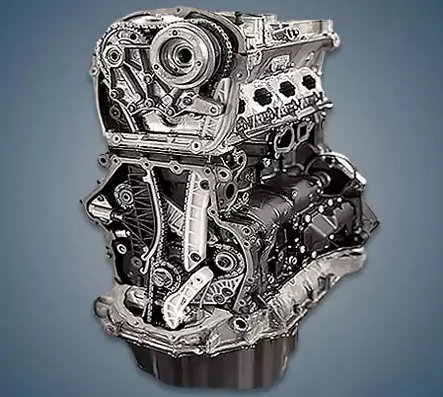
The EA888 gen1 series includes: BYT, BZB, CABA, CABB, CABD, CAWA, CAWB, CBFA, CCTA, CCTB.
Specifications
| Production years | 2007-2008 |
| Displacement, cc | 1798 |
| Fuel system | direct injection |
| Power output, hp | 170 |
| Torque output, Nm | 250 |
| Cylinder block | cast iron R4 |
| Block head | aluminum 16v |
| Cylinder bore, mm | 82.5 |
| Piston stroke, mm | 84.2 |
| Compression ratio | 9.6 |
| Features | DOHC |
| Hydraulic lifters | yes |
| Timing drive | chain |
| Phase regulator | on the intake shaft |
| Turbocharging | KKK K03 |
| Recommended engine oil | 5W-30 |
| Engine oil capacity, liter | 4.6 |
| Fuel type | petrol |
| Euro standards | EURO 4 |
| Fuel consumption, L/100 km (for Audi A5 2008) — city — highway — combined |
9.6 5.8 7.2 |
| Engine lifespan, km | ~250 000 |
| Weight, kg | 154 |
The engine was installed on:
- Audi A5 1 (8T) in 2007 – 2008.
Disadvantages of the Audi CABD engine
The timing chain, which frequently runs less than 100,000 kilometers, causes the most issues.
Numerous instances of timing chain jump following parking in gear have been reported on specialized forums.
Here, manifold swirl flaps and intake valves also coke rapidly.
The primary cause of this engine’s erratic operation is coking.
The engine’s pump, ignition coils, and catalyst are also weak points.