
Overview & Design Features
The Acura J30AC is a 3.0-liter (2997cc) SOHC V6 engine, part of Honda’s renowned J-series engine family. Specifically engineered for hybrid applications, this iteration represents a sophisticated blend of traditional internal combustion technology with advanced electrification. It is notable for its integration into performance-oriented hybrid systems, delivering a balance of fuel efficiency and robust power output. The J30AC upholds the J-series reputation for smooth operation and refined power delivery, a hallmark of Acura’s premium vehicles.
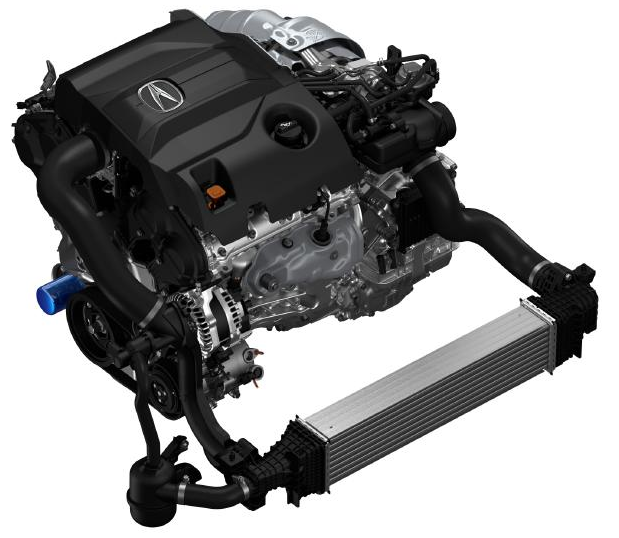
Constructed with an all-aluminum cylinder block and cylinder heads, the J30AC prioritizes weight reduction and efficient heat dissipation. It features a single overhead camshaft (SOHC) design per cylinder bank, incorporating Acura’s intelligent Variable Valve Timing and Lift Electronic Control (i-VTEC) technology, primarily influencing intake valve operation for optimized airflow across the RPM range. Fuel delivery is managed via multi-point port fuel injection (PFI), chosen for its reliability and precise control. The engine’s “AC” designation signifies its role within Acura’s advanced Sport Hybrid system, working in conjunction with electric motors and a dual-clutch transmission to enhance overall powertrain performance and efficiency.
The J30AC engine was primarily deployed in the 2017-2020 Acura MDX Sport Hybrid. In this application, it formed the core of the sophisticated three-motor Sport Hybrid Super Handling All-Wheel Drive (SH-AWD) system, providing motive power alongside the electric units. While its core design is rooted in the widely successful J-series, the J30AC features specific adaptations for seamless integration with hybrid components, reflecting its premium positioning and advanced technological focus within Acura’s lineup.
Technical Specifications
| Specification | Value |
|---|---|
| Displacement (cc) | 2997 |
| Max Power (hp (kW) @ RPM) | 257 (192) @ 6300 (engine only) |
| Max Torque (Nm (kg*m) @ RPM) | 289 (29.5) @ 4700 (engine only) |
| Fuel Type | Premium Unleaded (91+ Octane recommended) |
| Fuel Consumption (l/100 km) | Approx. 8.7 (Combined, as part of hybrid system) |
| Engine Type | V6, SOHC i-VTEC, Port Fuel Injection, Naturally Aspirated |
| Compression Ratio | 11.5:1 |
| Cylinder Bore (mm) | 86 |
| Piston Stroke (mm) | 86 |
| Valvetrain | SOHC with i-VTEC (intake) |
| Valves per Cylinder | 4 (24 total) |
| Additional Info | Integrated into Sport Hybrid SH-AWD system with 3 electric motors and 7-speed DCT |
Common Problems & Reliability
The J30AC, like other J-series engines, benefits from a reputation for robust reliability. However, specific considerations arise due to its hybrid nature and design. One common maintenance item, rather than a defect, involves the timing belt service. This engine still utilizes a timing belt, which requires replacement typically around 105,000 miles (168,000 km) or 7 years. Neglecting this service can lead to catastrophic engine failure. While less common on newer J-series, minor oil leaks from VTEC solenoid gaskets or valve cover gaskets can occur at higher mileage, usually presenting as weepage rather than significant loss. Another consideration, pertinent to the entire hybrid powertrain, is the long-term degradation or failure of hybrid battery components or electric motors. While not strictly an engine issue, it directly impacts the overall powertrain’s performance and service life.
With diligent adherence to the factory maintenance schedule, including crucial timing belt replacements, the J30AC engine itself is capable of achieving an expected service life well exceeding 200,000 miles (320,000 km) before requiring a major overhaul. The longevity of the associated hybrid components significantly influences the overall vehicle’s functional lifespan.
Maintenance Tips & Service Schedule
Optimal performance and longevity of the J30AC engine rely on strict adherence to a comprehensive maintenance schedule. Engine oil changes should be performed using synthetic 0W-20 or 5W-20 motor oil, typically every 5,000-7,500 miles (8,000-12,000 km) or according to the vehicle’s Maintenance Minder system. Spark plugs, specifically iridium-tipped types, require replacement around 105,000 miles (168,000 km). The most critical service is the timing belt replacement, which must be completed every 105,000 miles (168,000 km) or 7 years, whichever comes first. This service should always include the replacement of the water pump, timing belt tensioner, and idler pulleys.
Coolant flushes using Honda Type 2 Long-Life Coolant are recommended initially at 120,000 miles (192,000 km) or 10 years, then every 60,000 miles (96,000 km) or 5 years. For the associated 7-speed dual-clutch transmission, fluid checks and changes should follow the manufacturer’s specific intervals to ensure proper operation of the hybrid system. Regular inspection of accessory belts, brake fluid condition, and air filter replacement also contribute to the engine’s overall health and the vehicle’s performance.
Conclusion
The Acura J30AC engine, as part of the Sport Hybrid SH-AWD system, stands as a generally reliable and sophisticated powertrain choice. Its inherent J-series robustness, combined with the efficiency benefits of a well-integrated hybrid system, makes it an attractive option. For a used vehicle buyer, the J30AC can be considered a safe choice, provided a thorough service history is available, explicitly demonstrating adherence to the critical timing belt replacement schedule and any required maintenance of the hybrid system components. When properly maintained, this engine offers a compelling blend of power, smoothness, and efficiency, characteristic of Acura’s engineering prowess.