
From 2008 to 2011, the company produced the 2.0-liter Volkswagen CAWA 2.0 TSI engine, which was fitted to the first generation Tiguan crossover, which is highly favored in many nations. This unit is available under its own CCTB index for the American market.
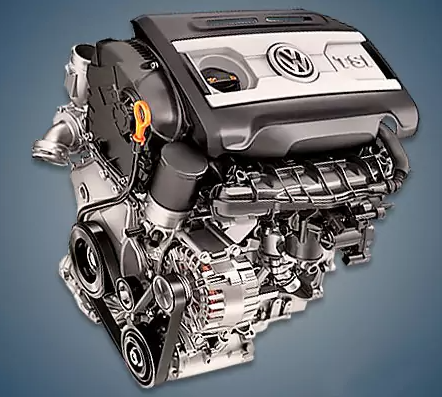
BYT, BZB, CABA, CABB, CABD, CAWA, CAWB, CBFA, CCTA, and CCTB are all part of the EA888 gen1 series.
Specifications
| Production years | 2008-2011 |
| Displacement, cc | 1984 |
| Fuel system | direct injection |
| Power output, hp | 170 |
| Torque output, Nm | 280 |
| Cylinder block | cast iron R4 |
| Block head | aluminum 16v |
| Cylinder bore, mm | 82.5 |
| Piston stroke, mm | 92.8 |
| Compression ratio | 9.6 |
| Features | DOHC |
| Hydraulic lifters | yes |
| Timing drive | chain |
| Phase regulator | on the intake shaft |
| Turbocharging | KKK K03 |
| Recommended engine oil | 5W-30 |
| Engine oil capacity, liter | 4.6 |
| Fuel type | petrol |
| Euro standards | EURO 4 |
| Fuel consumption, L/100 km (for VW Tiguan 2009) — city — highway — combined |
13.5 7.7 9.9 |
| Engine lifespan, km | ~300 000 |
| Weight, kg | 152 |
The engine was installed on:
- Volkswagen Tiguan 1 (5N) in 2008 – 2011.
Disadvantages of the VW CAWA engine
This motor’s weak point is the timing chain, which has already been stretched to 100,000 kilometers; the oil separator clogs quickly here, causing lubricant consumption; piston cracking from detonation is common, but forged alternatives are available;
Carbon deposits on the intake valves are typically the cause of floating engine speeds; they also become overgrown with soot, which causes the intake manifold’s swirl flaps to jam; if you pull for an extended period of time while replacing candles, you will need to purchase ignition coils.