
The sixth generation of the well-known Passat model and the comparable Skoda Superb 2 were equipped with the 2.0-liter Volkswagen BMP 2.0 TDI diesel engine, which was manufactured between 2005 and 2010. The fast wear of the oil pump hexagon is a common issue with this diesel engine.
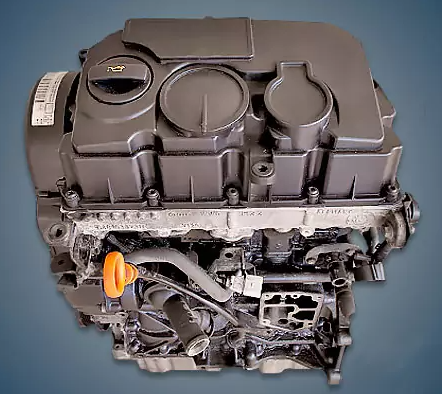
BKD, BKP, BMM, BMP, BMR, BPW, BRE, and BRT are also included in the EA188-2.0 series.
Specifications
| Production years | 2005-2010 |
| Displacement, cc | 1968 |
| Fuel system | unit-injectors |
| Power output, hp | 140 |
| Torque output, Nm | 320 |
| Cylinder block | cast iron R4 |
| Block head | aluminum 8v |
| Cylinder bore, mm | 81 |
| Piston stroke, mm | 95.5 |
| Compression ratio | 18.0 |
| Features | SOHC |
| Hydraulic lifters | yes |
| Timing drive | belt |
| Phase regulator | no |
| Turbocharging | VGT |
| Recommended engine oil | 5W-30 |
| Engine oil capacity, liter | 4.3 |
| Fuel type | diesel |
| Euro standards | EURO 4 |
| Fuel consumption, L/100 km (for Volkswagen Passat 2007) — city — highway — combined |
6.5 4.3 5.1 |
| Engine lifespan, km | ~280 000 |
| Weight, kg | 178 |
The engine was installed on:
- Skoda Superb 2 (3T) in 2008 – 2010;
- Volkswagen Passat B6 (3C) in 2005 – 2008.
Disadvantages of the VW BMP engine
The oil pump hex problem is the most well-known engine issue.
Unit-injectors have a resource of about 250,000 kilometers, and replacing them is highly costly.
Specialized forums also frequently discuss oil consumption up to one liter per 1000 kilometers.
A jammed turbine geometry is typically the cause of engine thrust failures.
A dirty particulate filter could also be the cause of a diesel engine’s unstable operation.