
Popular models like the fifth generation Polo, Skoda Fabia, and Seat Leon were equipped with the 1.4-liter 16-valve Volkswagen CGGB 1.4 MPi engine, which was put together between 2009 and 2015. Essentially, this power unit was just an improved BXW engine.
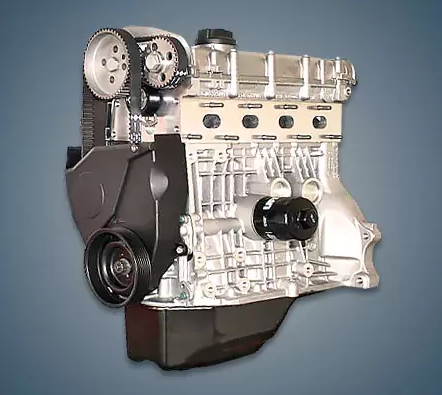
AEX, AKQ, AXP, BBY, BCA, BUD, CGGA, and CGGB are all part of the EA111-1.4 series.
Specifications
| Production years | 2009-2015 |
| Displacement, cc | 1390 |
| Fuel system | injector |
| Power output, hp | 86 |
| Torque output, Nm | 132 |
| Cylinder block | aluminum R4 |
| Block head | aluminum 16v |
| Cylinder bore, mm | 76.5 |
| Piston stroke, mm | 75.6 |
| Compression ratio | 10.5 |
| Features | DOHC |
| Hydraulic lifters | yes |
| Timing drive | belt |
| Phase regulator | no |
| Turbocharging | no |
| Recommended engine oil | 5W-30 |
| Engine oil capacity, liter | 3.2 |
| Fuel type | petrol |
| Euro standards | EURO 5 |
| Fuel consumption, L/100 km (for VW Polo 2012) — city — highway — combined |
8.0 4.7 5.9 |
| Engine lifespan, km | ~250 000 |
The engine was installed on:
- Volkswagen Polo 5 (6R) in 2009 – 2014;
- Seat Leon 2 (1P) in 2010 – 2012;
- Skoda Fabia 2 (5J) in 2010 – 2014;
- Skoda Roomster 1 (5J) in 2010 – 2015.
Disadvantages of the VW CGGB engine
This engine is far more dependable than VAG turbo engines.
Owners typically lament the ignition coils’ rapid failure.
A dirty throttle assembly or EGR is typically the source of floating engine speeds.
The valves bend if any of the timing belts, which cover about 90,000 kilometers, break.
Both rings and hydraulic lifters frequently knock during extended runs.