
From 2010 to 2015, a redesigned version of the well-liked Tiguan crossover, along with the Sharan and Jetta, were equipped with the 1.4-liter turbocharged Volkswagen CTHA 1.4 TSI engine. Compared to its predecessors, this unit, which was part of the updated series, was much more dependable.
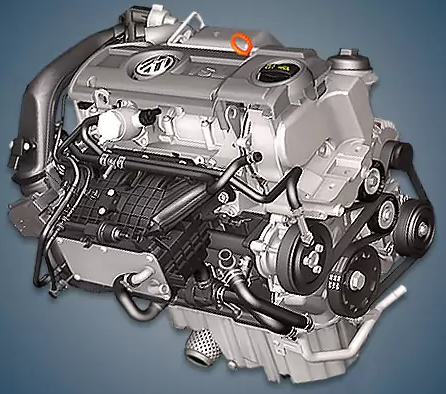
CBZA, CBZB, BMY, BWK, CAVA, CAVD, CAXA, CDGA, and CTHA are all part of the EA111-TSI series.
Specifications
| Production years | 2010-2015 |
| Displacement, cc | 1390 |
| Fuel system | direct injection |
| Power output, hp | 150 |
| Torque output, Nm | 240 |
| Cylinder block | cast iron R4 |
| Block head | aluminum 16v |
| Cylinder bore, mm | 76.5 |
| Piston stroke, mm | 75.6 |
| Compression ratio | 10.0 |
| Features | DOHC |
| Hydraulic lifters | yes |
| Timing drive | chain |
| Phase regulator | on the intake shaft |
| Turbocharging | KKK K03 & Eaton TVS |
| Recommended engine oil | 5W-30 |
| Engine oil capacity, liter | 3.6 |
| Fuel type | petrol |
| Euro standards | EURO 5 |
| Fuel consumption, L/100 km (for VW Tiguan 2012) — city — highway — combined |
10.1 6.7 8.0 |
| Engine lifespan, km | ~270 000 |
| Weight, kg | 130 |
The engine was installed on:
- Volkswagen Jetta 6 (1B) in 2010 – 2015;
- Volkswagen Sharan 2 (7N) in 2010 – 2015;
- Volkswagen Tiguan 1 (5N) in 2011 – 2015.
Disadvantages of the VW CTHA engine
The primary issues with this engine are related to fuel quality-related detonation.
Frequently, the pistons just break, in which case it is advised to replace them with forged ones.
The compression decreases because the unit is susceptible to carbon buildup on the valves.
The timing chain can extend up to 100,000 kilometers, which is a modest resource.
The turbine’s wastegate fails a little less frequently than the electronic control valve.
Frequent antifreeze leaks in the intercooler area are a common complaint, even on specialized forums.