
From 2005 to 2010, Volkswagen produced the 2.5-liter BGP injection engine, which was fitted to well-known models like the Golf and Jetta for the US market. This motor had multiple simultaneous analogues under the BGQ, BPR, and BPS indices.
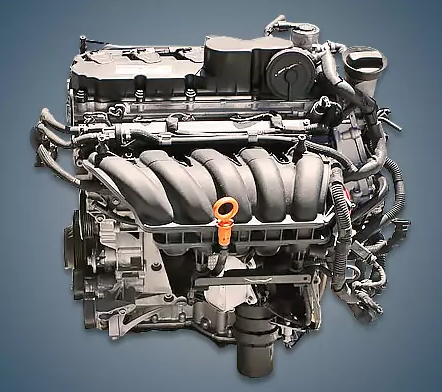
BGP, CBTA, CEPA, CTSA, DAZA, and DNWA are all part of the EA855 series.
Specifications
| Production years | 2005-2010 |
| Displacement, cc | 2480 |
| Fuel system | injector |
| Power output, hp | 150 |
| Torque output, Nm | 228 |
| Cylinder block | cast iron R5 |
| Block head | aluminum 20v |
| Cylinder bore, mm | 82.5 |
| Piston stroke, mm | 92.8 |
| Compression ratio | 10.0 |
| Features | no |
| Hydraulic lifters | yes |
| Timing drive | chain |
| Phase regulator | on the intake shaft |
| Turbocharging | no |
| Recommended engine oil | 5W-30 |
| Engine oil capacity, liter | 5.7 |
| Fuel type | petrol |
| Euro standards | EURO 4 |
| Fuel consumption, L/100 km (for VW Jetta 2006) — city — highway — combined |
11.2 8.1 9.3 |
| Engine lifespan, km | ~330 000 |
The engine was installed on:
- Volkswagen Beetle 1 (9C) in 2006 – 2010;
- Volkswagen Golf 5 (1K) in 2006 – 2008;
- Volkswagen Jetta 5 (1K) in 2005 – 2008.
Disadvantages of the VW BGP engine
These units experienced extremely fast timing chain stretching in the early years of production.
The fuel pump or its clogged filter is typically the cause of traction failures.
Ignition coils have a relatively short service life; a pump may leak up to 100,000 kilometers.
The coolant temperature sensor frequently malfunctions electrically.
Additionally, oil and antifreeze leaks are a common complaint from owners of vehicles with such engines.