
Overview & Design Features
The Acura K24A2 engine is a naturally aspirated, 2.4-liter (2354 cc) inline-four engine, part of Honda’s highly regarded K-series family. Manufactured by Honda Motor Co., Ltd., this engine is celebrated for its robust construction, efficient performance, and notable reliability. It represents a significant evolution in Honda’s four-cylinder engineering, designed to deliver a balance of power, fuel economy, and smooth operation, making it a cornerstone for Acura’s sport-oriented sedan offerings during its production run.
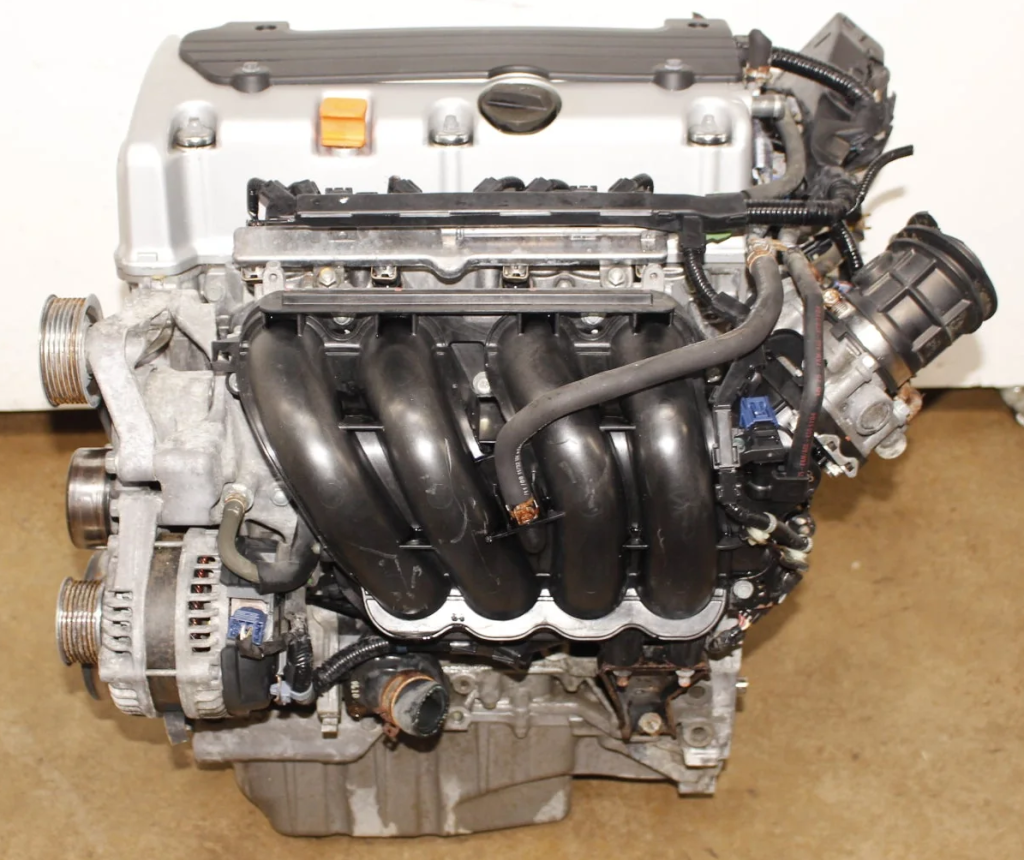
Key engineering features of the K24A2 include an all-aluminum cylinder block and cylinder head, contributing to its light weight and efficient heat dissipation. It utilizes a DOHC (Dual Overhead Camshaft) valvetrain with Honda’s intelligent Variable Valve Timing and Lift Electronic Control (i-VTEC) system, which dynamically adjusts valve timing and lift on both intake and exhaust valves for optimized power delivery across the RPM range. Fuel delivery is handled by multi-point port fuel injection. To mitigate vibrations inherent in inline-four configurations, the K24A2 incorporates dual balance shafts, enhancing refinement. The timing system is chain-driven, offering superior durability compared to belt-driven systems.
The K24A2 engine was primarily deployed in the first-generation 2004-2008 Acura TSX (chassis code CL9) in the North American market. Internationally, this engine variant also powered the Honda Accord Euro R (CL7 chassis) and Accord Type S models in European and Japanese markets, often with slight calibration differences. Its application underscored the vehicle’s sporty aspirations and premium positioning within its segment.
Technical Specifications
| Specification | Value |
|---|---|
| Displacement (cc) | 2354 |
| Max Power (hp (kW) @ RPM) | 205 (153) @ 7000 (2006-2008 Acura TSX) |
| Max Torque (Nm (kg*m) @ RPM) | 222 (22.6) @ 4500 (2006-2008 Acura TSX) |
| Fuel Type | Premium Unleaded (91+ RON) |
| Fuel Consumption (l/100 km) | ~9.8 (City) / ~7.8 (Highway) (Combined ~8.8, varies by model/transmission) |
| Engine Type | Inline-4, DOHC i-VTEC |
| Compression Ratio | 10.5:1 |
| Cylinder Bore (mm) | 87 |
| Piston Stroke (mm) | 99 |
| Valvetrain | DOHC i-VTEC |
| Valves per Cylinder | 4 (16 total) |
| Additional Info | Aluminum block/head, chain-driven timing, dual balance shafts |
Common Problems & Reliability
- VTC Actuator Rattle: A prevalent issue involves the Variable Timing Control (VTC) actuator producing a brief rattling noise during cold starts. This is caused by oil draining from the actuator overnight, leading to a momentary loss of hydraulic pressure upon startup. While often a nuisance, it generally does not lead to catastrophic engine failure but can be indicative of a worn actuator requiring replacement for optimal function and quiet operation.
- Oil Consumption: At higher mileages, some K24A2 engines may exhibit increased oil consumption. This is typically attributed to wear in piston rings or valve stem seals. Regular monitoring of oil levels and timely top-ups can mitigate issues, but significant consumption may necessitate more involved engine work such as piston ring replacement.
- Timing Chain Stretch/Tensioner Wear: Although chain-driven systems are generally durable, high-mileage K-series engines can experience timing chain stretch or wear in the hydraulic chain tensioner. Symptoms include a persistent rattling sound from the timing cover area, especially noticeable at idle. If left unaddressed, this can lead to improper valve timing and potential engine damage. Regular oil changes with recommended viscosity oil can prolong timing component life.
Under proper maintenance and regular servicing, the Acura K24A2 engine is capable of achieving a realistic service life of 200,000 to 300,000 miles (320,000 to 480,000 km) or more before requiring major overhaul or rebuild.
Maintenance Tips & Service Schedule
- Oil Changes: Adhere to manufacturer recommendations for oil viscosity, typically 5W-30 or 0W-20 synthetic blend or full synthetic oil. Perform oil and filter changes every 5,000 to 7,500 miles (8,000 to 12,000 km) or according to the vehicle’s maintenance minder system, whichever comes first. Using high-quality oil is crucial for the longevity of VTEC components and the timing chain.
- Spark Plugs: Replace iridium-tipped spark plugs approximately every 100,000 to 105,000 miles (160,000 km). Use OEM-specified or equivalent high-quality plugs to ensure optimal ignition and fuel efficiency.
- Coolant Flush: Perform a coolant flush using Honda Type 2 coolant at the manufacturer-specified interval, typically every 10 years or 120,000 miles (192,000 km) for the initial service, then every 5 years or 60,000 miles (96,000 km) thereafter.
- Valve Adjustment: Periodically check valve clearances, typically around 100,000 miles (160,000 km), especially if any unusual valvetrain noise is detected. Proper valve clearance ensures optimal engine performance and prevents premature wear.
- Air Filter Replacement: Replace the engine air filter every 15,000 to 30,000 miles (24,000 to 48,000 km) or more frequently in dusty environments to maintain proper air intake and fuel mixture.
- PCV Valve Inspection/Replacement: Inspect the PCV valve for proper function periodically and replace it if clogged or malfunctioning, as this can affect crankcase pressure and oil consumption.
Conclusion
The Acura K24A2 engine is widely regarded as an exemplary powertrain, marrying performance with exceptional durability. Its intelligent design, incorporating i-VTEC technology and robust construction, ensures a engaging driving experience and long-term reliability. For a used vehicle buyer, an Acura TSX equipped with the K24A2 engine represents a safe and dependable choice, provided the vehicle has a documented history of consistent maintenance. While minor issues like the VTC actuator rattle can occur, these are generally manageable and do not detract significantly from the engine’s overall sterling reputation. With diligent adherence to recommended service intervals and attentive care, this engine can reliably serve its owners for hundreds of thousands of miles.